The Servant’s Pen: How Jawhar Aftabachi’s Memoir Recalibrates Court Elite Biases in Early Mughal Historiography
A study by historian Ali Anooshahr re-evaluates the Tadhkirat al-Vaqi‘at, showing how Humayun’s ewer-bearer offers a non-elite counter-narrative to formal Mughal imperial chronicles.

Devika Menon for SwavedaOctober 24, 2026
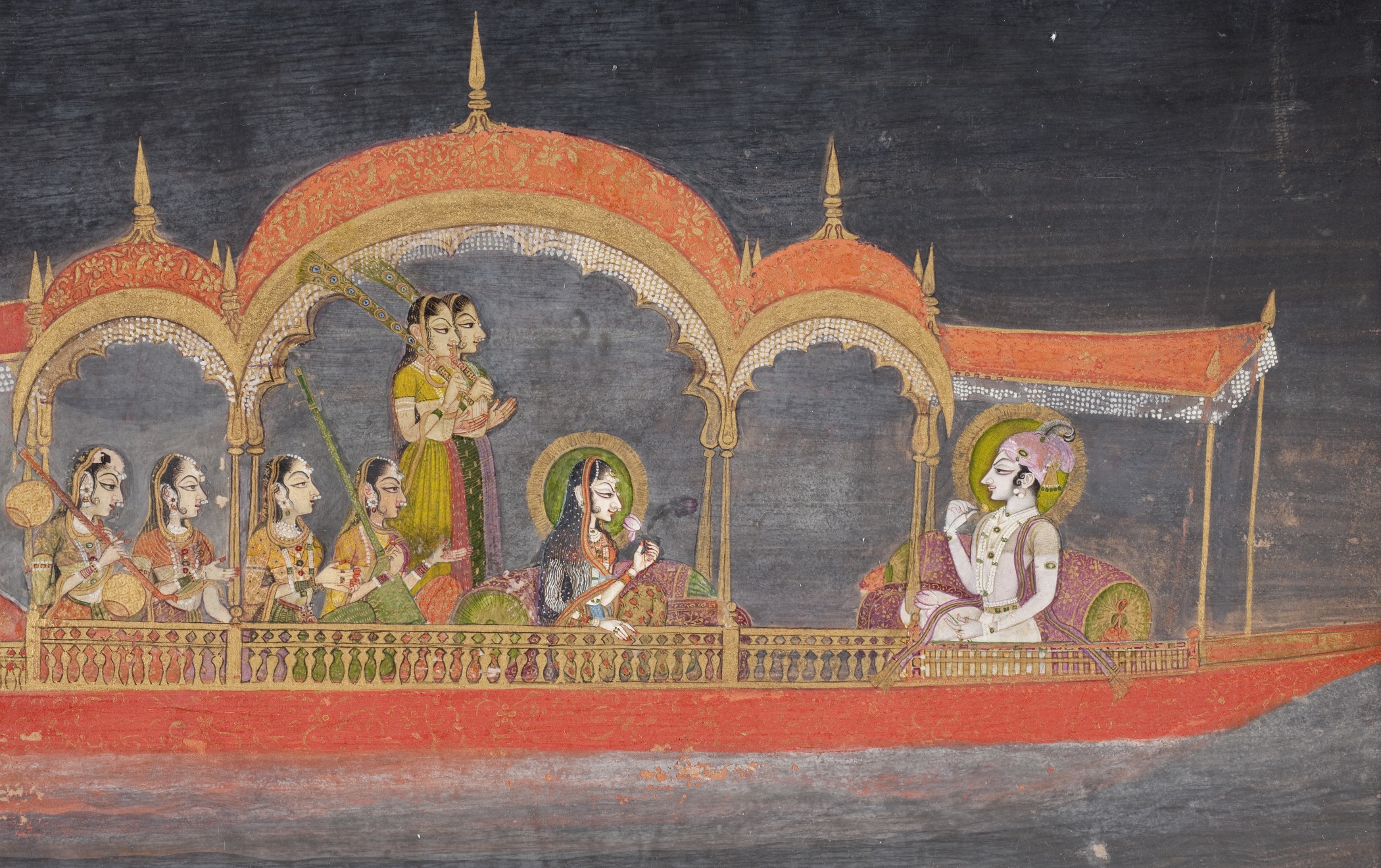
Official imperial court chronicles recorded history from the high seats of power. In contrast, subaltern personal accounts preserve the physical realities of royal exile, camp life, and domestic service.
In early Mughal historiography, court historian Abu’l-Fazl’s Akbarnama (Book of Akbar) presented an idealized, grand vision of the dynasty’s lineage and divine right. However, a parallel narrative survived through a low-ranking palace servant named Jawhar Aftabachi (aftabachi meaning "ewer-bearer" or water-carrier). Enslaved as a child in the Black Sea region by Ottomans, Jawhar was transported across the Indian Ocean to Gujarat before entering the service of the second Mughal emperor, Humayun (Oxford University Press).
In 1587, decades after Humayun’s death, Jawhar set down his memories in Persian as the Tadhkirat al-Vaqi‘at (Recollections of Events). A study by historian Ali Anooshahr re-evaluates Jawhar's text, positioning the ewer-bearer’s chronicle as a vital counter-weight to formal court accounts (SAGE Journals).
The Water-Carrier's Horizon
Unlike grand viziers or noble commanders, an aftabachi was tasked with washing the sovereign’s hands and maintaining royal ablution vessels. Jawhar stood inches from Emperor Humayun during his most vulnerable moments, including his military defeat against Sher Shah Suri and his subsequent exile across Rajasthan and Sindh toward Safavid Persia.
Scholars divide 16th-century Mughal sources into official state histories (ta'rikh) and personal memoirs (tadhkira). Where official histories smoothed over court panics, military mutinies, and financial exhaustion, Jawhar recorded unvarnished details of camp logistics. He noted the scarcity of water during desert marches, the execution of insubordinate officers, and the precise mechanical breakdown of household authority when royal fortunes fell.
According to Anooshahr's analysis, Jawhar’s text reveals a world where traditional kinship networks were breaking down, replaced by impersonal administrative ties and bureaucratic service in early modern state-building. His narrative documents how military slavery was repurposed into spiritual discipleship and administrative duty (Yale MacMillan Center).
Divergent Accounts of Imperial Rupture
The contrast between imperial rhetoric and domestic observation becomes clear when comparing Abu’l-Fazl’s later Akbarnama with Jawhar’s Tadhkirat al-Vaqi‘at.
When Humayun lost his baggage train and treasury at the Battle of Chausa in 1539, court historians framed the disaster in cosmic terms, describing it as a temporary trial ordained by providence before ultimate restoration. Jawhar, however, recorded the literal panic on the ground: the loss of horses, the drowning of servants in the Ganges, and the practical humiliation of an emperor forced to borrow a water-skin from a local carrier to swim across the river.
Evidence shows that Jawhar’s prose deliberately avoids the intricate, rhyming Persian style (insha) favoured by high court scribes. Instead, his syntax remains straightforward and colloquial. His vocabulary incorporates vernacular terms picked up across North India and Central Asia, reflecting his life journey from Eurasian slave markets through Gujarat to the imperial camp (Oxford University Press).
Recalibrating Subaltern Agency
Historians debate the extent to which Jawhar edited his recollections later in life to align with Akbar’s established court policies. Because Jawhar composed his memoir around 1587 under Akbar’s reign, some scholars argue that his praise of Humayun's piety served to validate the ruling dynasty's legitimacy.
Yet Anooshahr demonstrates that Jawhar’s position as an enslaved servant who rose through low-level administration provides a unique window into alienation and selfhood in early modern South Asia (UC Davis Humanities). His self-representation does not fit cleanly into modern notions of individual triumph; rather, it reflects a survivor navigating state centralization.
Numismatic evidence from Humayun’s reign reinforces Jawhar's descriptions of financial collapse during exile. Emergency silver coinages (shahrukhi) issued in Badakhshan and Kabul during the 1540s show variable weights and irregular minting standards, matching Jawhar’s notes on the monarch's reliance on localized debased currencies to pay his remaining retinue.
By re-centering the Tadhkirat al-Vaqi‘at, modern historiography moves away from elite-centric dynastic narratives. The record of sixteenth-century North India relies not only on high ministers composing grand histories, but also on the servant who carried the emperor's water-pitcher through the desert.