The Scribes of the Copper Plate: What Dravidian Land-Grant Terminology in Epigraphia Carnatica Reveals About Kadamba Rural Administration
A study of early Kadamba epigraphy traces how local Dravidian agrarian terms for land measurement and currency entered formal Sanskrit revenue charters in fifth-century Karnataka.

Asha Naidu for SwavedaNovember 4, 2026
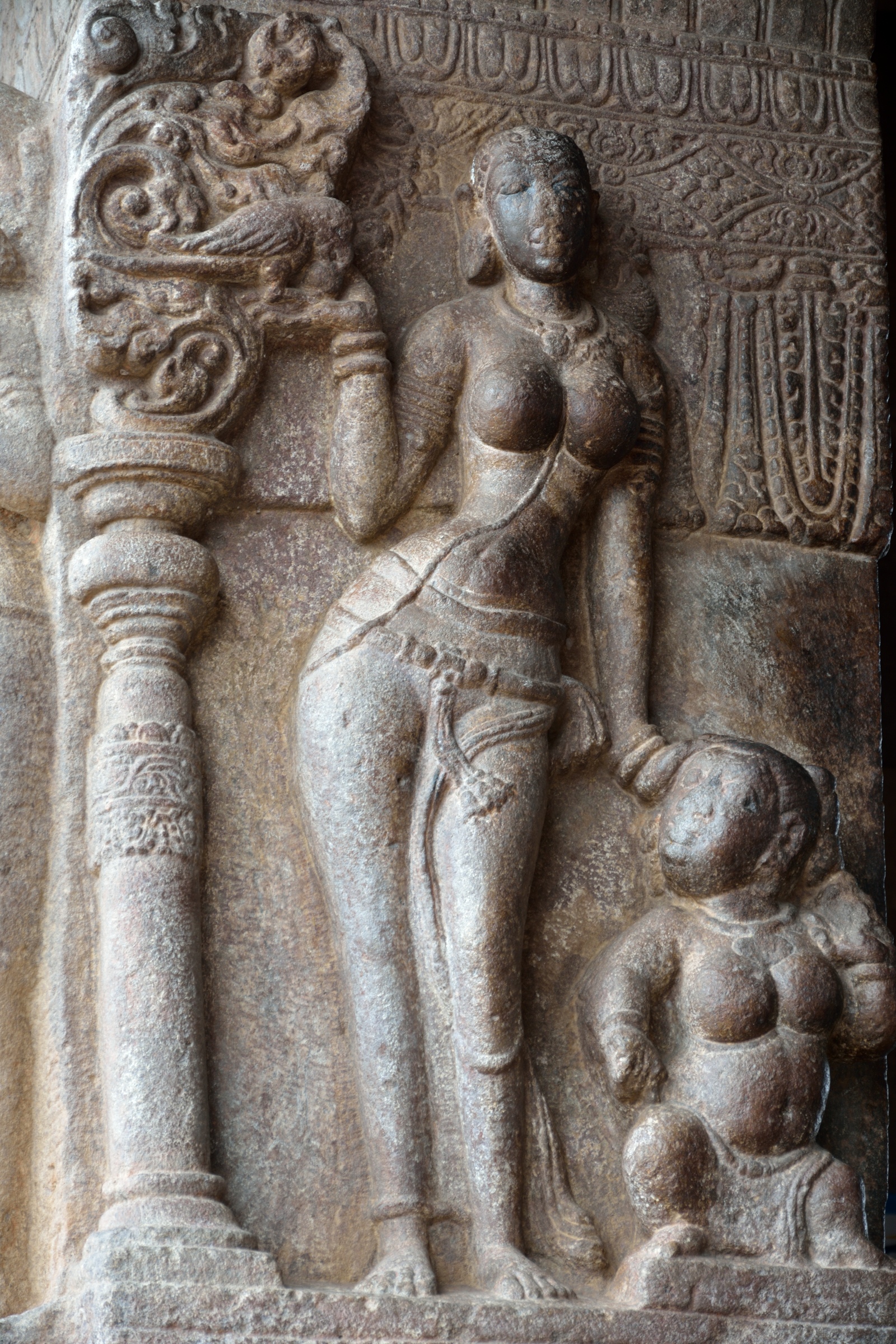
The etymology of administrative language often hides in plain sight, carved directly into stone or hammered into thin sheets of copper. When the Kadamba dynasty governed the Deccan plateau from Banavasi, their chanceries faced a practical administrative problem: how to record land grants, tax exemptions, and boundary measurements using imperial Sanskrit formulas while maintaining precision for local agrarian communities who spoke Dravidian dialects.
The solution preserved in the epigraphic record was not the replacement of local terms, but their formal absorption. In the published volumes of Epigraphia Carnatica, compiled by Benjamin Lewis Rice for the Mysore Archaeological Department, early administrative charters demonstrate how vernacular terms for spatial measurement and coin denominations were codified into royal decrees.
The Syntax of Statecraft at Halmidi
The earliest extended record of this administrative blending appears on a sandstone slab discovered in 1936 by M. H. Krishna, then director of the Mysore Archaeological Department, in the village of Halmidi in Hassan district. The Halmidi inscription, engraved during the fifth century under the Kadamba king Kakusthavarman, records a royal grant of land and tax privileges to a military officer named Vija Arasa.
The text opens with a Sanskrit invocation to Vishnu before shifting into Pūrvada Haḷegannaḍa (Pre-Old Kannada, an early stage of the Kannada language). The inscription documents the donation of the village of Palmaḍi (modern Halmidi) and the exemption of its wet rice fields from standard revenue levies, specifying that one-tenth of the yield be reserved for local maintenance.
Linguist T. Burrow noted that the text displays a complex interaction between Indo-Aryan legal phrasing and native Dravidian syntax. While high administrative titles and religious formulas drew heavily from Sanskrit, the actual mechanics of rural governance—the terms defining field boundaries, agricultural yields, and local rights—relied on regional vernacular vocabulary.
Measuring the Realm: The Mattar and the Gadyāṇa
As Kadamba scribes issued copper-plate grants (tāmra-śāsana, royal land charters inscribed on metal plates), they standardized two key Dravidian loanwords across their administrative zones: mattar (a unit of land area) and gadyāṇa (a gold coin or weight standard).
The term mattar (also appearing in inscriptions as mattara) served as the primary measure of agricultural land throughout early medieval Karnataka. Epigraphic analysis in Epigraphia Carnatica indicates that a mattar did not represent an abstract mathematical grid. Instead, it was defined by practical agricultural output—specifically, the area of wet soil that could be plowed by a single yoke of oxen in a day, or the land area requiring a fixed quantity of seed grain.
By incorporating mattar alongside traditional Sanskrit metrological terms like nivartana (a Sanskrit land measure), Kadamba revenue officials ensured that royal grants matched the local agrarian realities of the Malnad forest zone and the adjoining plains.
Similarly, financial transactions and revenue valuations in Kadamba records referenced the gadyāṇa. Dravidian etymological analysis connects the term to regional roots for weighing and counting. Rather than forcing foreign currency terminology onto village assemblies, royal scribes adopted the gadyāṇa into Sanskrit grant formulas, defining tax obligations and temple endowments in units that local merchants and village councils (mahājana) already recognized.
Epigraphic Stratigraphy and Dating
Scholars debate the precise chronological boundaries of these early linguistic shifts. Evidence shows that early Kadamba charters transitioned from Prakrit (the middle Indo-Aryan vernaculars used by earlier dynasties like the Shatavahanas) to Sanskrit during the fourth century, before incorporating Kannada administrative prose in the fifth century.
Epigraphist G. S. Gai placed the Halmidi inscription to approximately 450–500 CE based on paleographic features of the Kadamba-Brahmi script. Epigraphist D. C. Sircar proposed a slightly later date toward the end of the sixth century, arguing that certain letter shapes reflect later developments. Epigraphist K. V. Ramesh observed that variations in early regional scripts often reflect rustic scribal styles rather than chronological delays, maintaining that the fifth-century assignment aligns with the historical genealogy of the Kadamba kings mentioned in the text.
Rural Governance and Bimodal Bureaucracy
The incorporation of Dravidian metrology into early royal grants reveals a pragmatic administrative model. The Kadambas did not impose a single linguistic standard across all levels of society. Sanskrit served as the language of royal praise (praśasti), courtly legitimacy, and pan-regional diplomacy. Dravidian loanwords and Kannada administrative clauses governed the operational details of field boundaries, water rights, tax exemptions, and local legal disputes.
This administrative division allowed the centralized court at Banavasi to interact with village assemblies without disrupting established local systems of measurement and trade. By the time the Western Chalukyas of Badami succeeded the Kadambas in the sixth century, this bilingual administrative template—combining imperial Sanskrit prologues with precise Dravidian land terminology—had become the standard model for epigraphic record-keeping across the Deccan.