The Rice of the Burial Urns: What Phytoliths at Adichanallur Reveal About Early Iron Age Cultivation
Microscopic silica analysis of organic residue inside Adichanallur's burial urns provides direct evidence of domesticated rice, shedding light on Early Iron Age agricultural transitions in South India.

Rohan Bhattacharya for SwavedaAugust 21, 2026
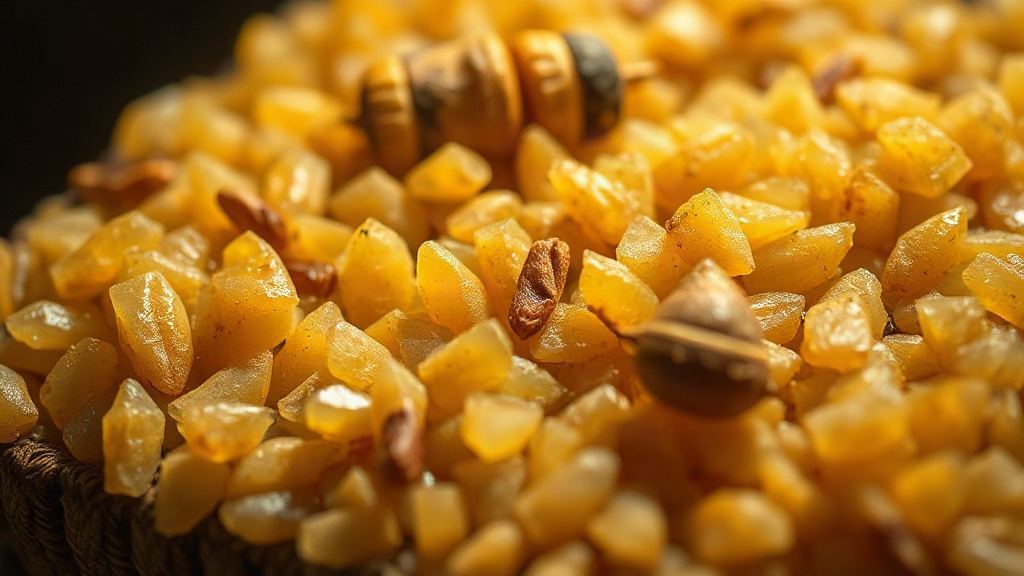
The dry, red gravel hills of Adichanallur (literally "the mound of Adichan," an ancient settlement site), situated along the Tamraparni (copper-colored leaf) River basin in the Thoothukudi district of Tamil Nadu, have long served as a battleground for South Asian chronological disputes. First excavated by the German naturalist Jagor in 1876, and subsequently by Alexander Rea of the Archaeological Survey of India (ASI) between 1899 and 1905, the site is one of the largest megalithic urn burial habitations in the Indian subcontinent. Hundreds of large, coarse black-and-red ware (a distinct ancient pottery type fired to produce a dark interior and reddish exterior) urns lie buried in the hard quartz gravel. For over a century, the primary challenge has not been finding artifacts, but establishing their precise chronological and environmental context.
While sensational headlines frequently claim extreme antiquity for the site, field archaeologists have long demanded direct, empirical data to map the transition of the southern Deccan into systematic agriculture. That data is now emerging from the discipline of micro-botanical analysis. Specifically, the study of phytoliths (microscopic silica structures formed within plant tissues that persist long after the organic matter has decayed) recovered from the interior of the burial urns is providing direct evidence of domesticated rice (Oryza sativa) cultivation during the Early Iron Age.
The Stratigraphic Problem of Adichanallur
In South Indian archaeology, dating burial sites has historically been fraught with difficulty. Unlike stratified habitation mounds where distinct layers of soil accumulate sequentially over centuries, urn burials are intrusive. Ancient diggers cut deep pits into older gravel layers to deposit their dead, mixing younger organic materials with older soils. This stratigraphic disturbance often compromises radiocarbon dating when conducted on loose charcoal fragments collected from the surrounding matrix.
⚖ Scholarly debate: Scholars debate the precise temporal boundaries of the South Indian Iron Age and the true age of the Adichanallur burials. One school of thought, represented by traditional chronologies published in Puratattva (archaeology) and Man and Environment, historically placed the beginning of the South Indian Iron Age around 1000 BCE to 900 BCE. Another group of researchers, citing accelerated mass spectrometry (AMS) radiocarbon dates from carbonized rice and organic matter inside the urns, argues for a much deeper chronology. These researchers push the site's usage back to 1500 BCE or even earlier, suggesting that the Southern Deccan transitioned to metallurgy and intensive agriculture much earlier than previously assumed.
To resolve these disputes, archaeologists have increasingly turned away from loose soil charcoal and toward the sealed environments inside the burial urns themselves. When these massive earthenware vessels were lowered into the ground, they were frequently packed with funerary offerings, including husked and unhusked grains, to sustain the deceased. Because these vessels remained sealed under heavy clay capstones, the organic materials inside were shielded from modern root contamination and shifting soil water.
Phytoliths as Botanical Fingerprints
During systematic excavations conducted by the ASI, researchers extracted sediment samples from the interior cavities of several intact black-and-red ware burial urns. Rather than searching only for macro-botanical remains—such as charred grains, which are easily crushed or degraded in acidic soils—paleobotanists focused on isolating phytoliths.
Plants absorb soluble silica from groundwater. This silica precipitates within the cellular spaces of the plant's leaves, stems, and glumes (the hard outer husks of cereal grains). When the plant rots or burns, these microscopic silica skeletons remain in the soil. Crucially, different plant families, and even different species within the grass family (Poaceae), produce distinct, identifiable phytolith shapes.
Analysis of the Adichanallur urn residue revealed an abundance of "bulliform" (fan-shaped) and "double-peaked" glume phytoliths. In paleobotanical taxonomy, these specific shapes are characteristic of the genus Oryza. By measuring the aspect ratios and morphological features of these silica structures, researchers distinguished wild rice (Oryza rufipogon) from fully domesticated rice (Oryza sativa).
Evidence shows that the phytoliths recovered from the Adichanallur urns belong predominantly to domesticated Oryza sativa. The high concentration of glume phytoliths—the parts of the plant associated with the husking process—suggests that processed rice grains, rather than wild, gathered grasses, were placed inside the urns as part of mortuary rituals.
Implications for Early Iron Age Agriculture
This microscopic evidence reframes our understanding of the agricultural economy of the southern Deccan during the transition from the Neolithic-Chalcolithic period to the Iron Age. Rather than relying solely on pastoralism or opportunistic foraging, the communities that buried their dead at Adichanallur practiced systematic, wet-field or dry-field rice cultivation.
The presence of domesticated rice in these funerary contexts indicates that rice was not merely a supplemental food source but held deep cultural and ritual significance. Mortuary rituals require surplus; the deliberate dedication of large quantities of processed grain to a burial vessel implies a reliable agricultural yield capable of supporting communal ceremonies.
Furthermore, this paleobotanical data aligns with wider archaeological analyses published in journals like Antiquity, which trace the spread of rice cultivation technologies southward along the major river valleys of the peninsula. The presence of sophisticated water-retention systems and agricultural tools in nearby Iron Age habitations supports the theory that the Tamraparni basin was a highly organized agricultural landscape during the first millennium BCE.
By focusing on the boring, microscopic details of silica skeletons rather than spectacular gold or bronze grave goods, archaeology is slowly reconstructing the actual daily labor of the people who inhabited the ancient southern Deccan. The phytoliths of Adichanallur offer a sober, empirical anchor for South Indian protohistory, demonstrating that long before the rise of historic dynasties, the banks of the Tamraparni were already shaped by the rhythmic cycles of the rice harvest.
Sources and Further Reading:
- Archaeological details and historical contexts derived from reports by the Archaeological Survey of India.
- For research on phytolith taxonomy and rice domestication, see the Journal of Archaeological Science.
- On the dating debates of South Indian megalithic sites, refer to Antiquity Journal and the publications of the Indian Society for Prehistoric and Quaternary Studies.