The Pedestal of the Brahmaputra: What the Bronze Vessels of Ambari Reveal About Early Medieval Metal Casting
Excavations at the Ambari site in Guwahati challenge the traditional narrative that Assam's iconic footed vessels arrived with the medieval Tai-Ahom, revealing a older indigenous casting tradition.

Rohan Bhattacharya for SwavedaAugust 13, 2026
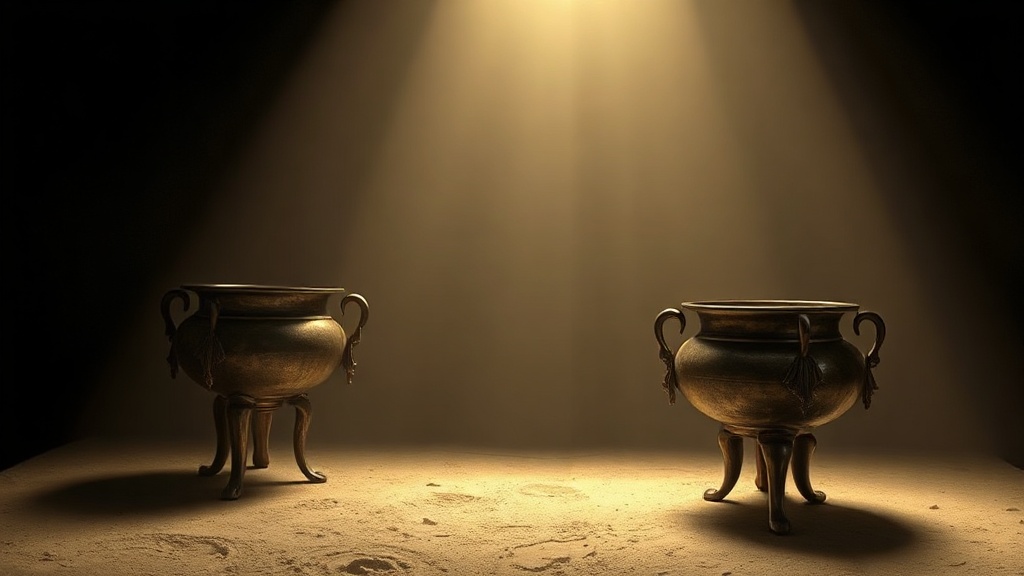
The xorai (a traditional offering tray with a dome-like pedestal) is one of the most recognizable material symbols of Assamese culture. Made of kanh (bell metal, a high-tin bronze alloy) or pitor (brass), this lidded, footed container is central to religious offerings, formal greetings, and community life across the Brahmaputra Valley.
For generations, local tradition holds that the design of the xorai, along with the bota (a small, flat-topped offering tray on a low pedestal), was introduced to the region by the Tai-Ahom people. The Tai-Ahom, a Tai group from present-day Yunnan and Myanmar, crossed the Patkai hills in the early 13th century and established the Ahom kingdom. According to popular memory, they brought these specific shapes of footed tableware from Southeast Asia, where similar pedestal bowls are common in Buddhist rituals.
However, systematic excavations by the Archaeological Survey of India (ASI) and the Assam State Department of Archaeology have revealed a different timeline. The physical stratigraphy of the Ambari archaeological site in the heart of Guwahati indicates that the technology and form of the pedestal vessel were well established in the Brahmaputra Valley centuries before the first Tai-Ahom migration.
The Stratigraphy of Ambari
Located in the busy urban center of Guwahati, Ambari was first discovered accidentally in 1969 during construction work. Subsequent excavations, documented in the reports of the Archaeological Survey of India and discussed in the journal Puratattva, revealed a dense sequence of cultural layers. The site acted as an active river port, workshop, and residential area from the early centuries of the common era through the medieval period.
The physical profiles of the trenches offer clear chronological indicators. Archaeologists divided the site into distinct cultural periods based on soil layers and associated artifacts. Period I, the lowest undisturbed layer, dates from the 7th century to the 12th century CE. It is characterized by Kaolin clay pottery, stone sculptures in the Kamarupa style, and a significant assemblage of metal objects.
It is within these early medieval layers, sealed beneath the later Ahom-period silt and debris, that researchers recovered copper-alloy vessels, including fragments of footed trays and stands. The presence of these objects in contexts dating to the 9th to 11th centuries CE proves that the casting of pedestal vessels was an indigenous industry during the Kamarupa kingdom, long before the 13th-century Tai-Ahom arrival. This layer-by-layer sequence directly complicates the straightforward narrative of a late, imported technology.
Metallurgical Composition and Casting Techniques
The bronze and brass objects recovered from Ambari offer important clues about early medieval metalworking in Northeast India. According to metallurgical analyses referenced by historians of the region in publications like Man and Environment, the early vessels were manufactured using both hammer-beating and the cire perdue (lost-wax casting) method.
The alloys used in these early vessels show a sophisticated understanding of metallurgy:
- High-Tin Bronze (Kanh): Many of the early medieval fragments consist of copper alloyed with a high percentage of tin, often exceeding 20 percent. This specific alloy produces a resonant, silvery metal that is highly resistant to corrosion but requires rapid quenching (sudden cooling in water) during the hot-working process to prevent it from becoming brittle.
- Brass (Pitor): Other vessel fragments from the Kamarupa period are made of brass, an alloy of copper and zinc. The presence of brass indicates established trade routes, as zinc ore was not widely available locally and had to be sourced from other parts of the subcontinent or neighboring regions.
The physical forms found at Ambari include hollow, flared pedestals that were cast separately and then joined to shallow bowls using rivets or soldering. This structural design is identical to the basic engineering of the modern xorai. Rather than being a foreign import, the xorai appears to be an evolution of these early medieval vessel types, shaped by local functional needs.
Cultural Synthesis in the Brahmaputra Valley
While the archaeological evidence shows that pedestal vessels existed in Assam prior to the 13th century, scholars debate the exact nature of the relationship between the Kamarupa-period vessels and the later Ahom-period xorai.
Rather than a simple story of one group introducing a new object to another, the historical record suggests a process of cultural synthesis. The incoming Tai-Ahom brought their own traditions of using elevated trays, known as phun (a high-footed ritual tray) or pan (a traditional offering receptacle) in Tai languages, for royal and religious ceremonies. When they settled in the Brahmaputra Valley, they encountered an active, highly skilled local guild of metalworkers consisting of the Kahar (an artisan caste specializing in bell-metal work) and the Mariya (a Muslim artisan community specializing in hand-beaten brassware) who were already casting footed bronze vessels using local alloys.
Over the centuries, the two traditions merged. The Ahom court patronized these local metalworkers, and the Sanskritized court culture adopted the local Kamarupa-style pedestal vessels for state rituals. The word xorai itself reflects this complex history. While some scholars link it to the Arabic-Persian word sarai (meaning a tray, lid, or tavern, introduced during medieval trade and military contacts), others suggest older Austroasiatic or Tibeto-Burman linguistic roots associated with offerings.
The excavations at Ambari provide a physical anchor for this history, detailed in the pages of Antiquity and regional excavation summaries. By examining the soil layers and the chemical composition of the bronze fragments, archaeologists have demonstrated that the technological lineage of Assam’s iconic metalwork runs much deeper into the soil of the Brahmaputra Valley than popular tradition suggests. It is a reminder that what is often celebrated as a sudden cultural arrival is, more often than not, a slow, deep-time accumulation of local soil, ash, and craft.