The Mud-Brick Ramparts of Binjor: What Early Harappan Stratigraphy Reveals About Hakra-Phase Flood Defenses
Excavations at Binjor in Rajasthan reveal a gradual transition from Hakra-phase occupations to early Harappan mud-brick fortifications, challenging theories of sudden urbanization on the Ghaggar-Hakra plain.

Rohan Bhattacharya for SwavedaSeptember 7, 2026
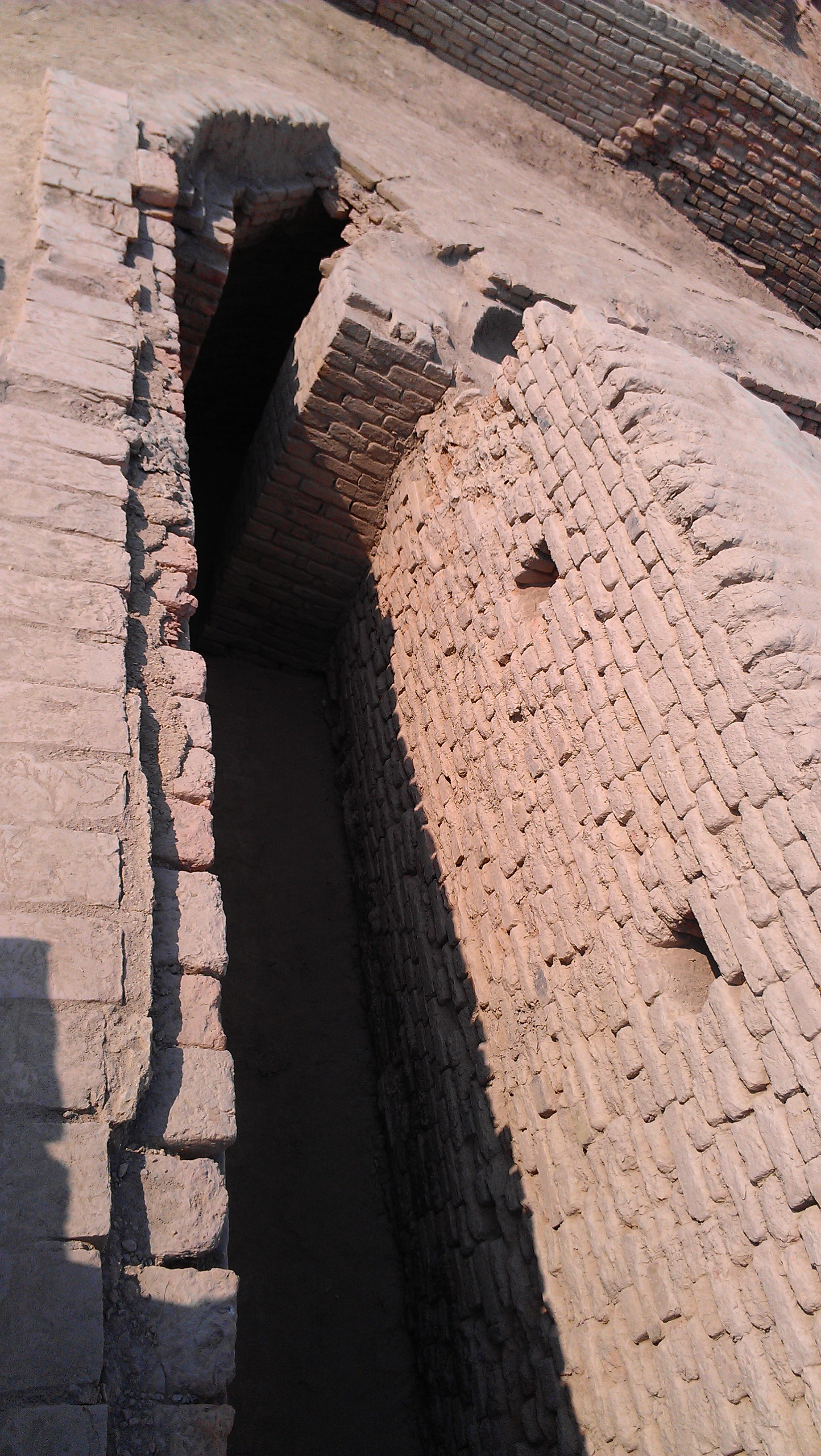
The search for the origins of Indus Valley urbanization often suffers from a preference for the grand narrative. In popular accounts, mature Harappan cities seem to spring fully formed from the alluvial soil, complete with planned streets and monumental brick walls. However, the patient work of cleaning section walls and counting pottery fragments tells a different story.
At the site of Binjor, officially designated as 4MSR by the Archaeological Survey of India (ASI), the stratigraphy—the analysis of successive soil and occupational layers—reveals a slow transition. Located near the India-Pakistan border in the Sri Ganganagar district of Rajasthan, this relatively small settlement sits on the palaeochannel (an ancient, inactive riverbed) of the Ghaggar-Hakra river. The Ghaggar-Hakra is an intermittent river system in India and Pakistan, and scholars debate whether this channel is the historic Sarasvati River mentioned in ancient texts, a topic that remains highly contested in South Asian archaeology.
Recent excavations directed by Sanjay Kumar Manjul and Research Associate Arvin Manjul challenge the older hypothesis of a sudden civilizational leap. Instead, the physical layers at Binjor document a local, gradual, and highly practical effort to manage the seasonal floods of the Ghaggar-Hakra floodplain.
The Stratigraphic Sequence of Binjor
Excavators at Binjor have identified a clear, unbroken occupational sequence. The lowest occupational layer, resting directly on the natural riverine silt, belongs to the Hakra phase (an early cultural stage of the Indus Valley dating to the fourth millennium BCE, named after the Hakra riverbed). Historically, the Hakra phase has been treated as a pastoral, semi-nomadic precursor to the settled agricultural communities of the Early Harappan period.
The evidence shows that the earliest inhabitants of Binjor constructed circular huts of wattle and daub (woven wooden strips covered with clay). They dug pit dwellings into the natural soil to shield themselves from the extreme desert winds of northern Rajasthan. The pottery of this deepest phase is characterized by Hakra mud-applied ware (pottery where the external surface of the vessel is coated with a mixture of wet clay and sand to increase heat resistance) and incised pottery bearing simple geometric lines.
What makes Binjor crucial for Indian archaeology is the physical interface between this Hakra deposit and the overlying Early Harappan layers. In many sites across the region, a sterile layer of sand or silt—indicating a prolonged period of abandonment—separates these two phases. At Binjor, the transition is continuous. The circular huts of the Hakra phase gradually give way to rectangular houses built of molded mud bricks. The pottery of the lower levels does not disappear; rather, Hakra ware styles persist alongside the emerging red-and-black painted designs typical of the Early Harappan Kot Diji style (an early archaeological culture phase of the Indus Valley characterized by specific painted ceramic motifs, named after the site of Kot Diji in Sindh).
The Evolution of the Mud-Brick Rampart
The most significant architectural feature at Binjor is the mud-brick fortification wall, or rampart, that encloses the settlement. In early archaeological reports of the mid-20th century, such fortifications were routinely interpreted as defensive structures built to withstand military invasions.
A closer look at the stratigraphy at Binjor suggests a different primary function. The earliest phase of the fortification wall was constructed during the transition from the Hakra to the Early Harappan phase. The bricks used in this initial wall are irregular and lay directly upon the water-deposited silts of the floodplain.
During the excavations, archaeologists noted that the outer face of the fortification wall showed signs of water erosion and subsequent repair. Layers of fine, laminated clay—characteristic of slow-moving floodwaters—accumulated directly against the exterior face of the mud-brick wall. Inside the wall, however, these clay deposits are absent.
This stratigraphic relationship indicates that the wall functioned primarily as a flood dyke (an embankment built to prevent flooding). The early residents of Binjor did not build a massive fortress to repel armies; they built a sturdy barrier to keep the seasonal floods of the Ghaggar-Hakra river from dissolving their mud-brick homes. Over decades, as the river deposited more silt on the plains, the ground level outside the wall rose. The inhabitants responded by raising the height of the rampart, adding new courses of mud bricks directly on top of the older, water-damaged layers.
The Ceramic Transition and Kiln Technology
The domestic debris recovered from the stratified layers at Binjor further supports this model of gradual, localized development. In reports published in journals like Puratattva (the annual bulletin of the Indian Archaeological Society) and other academic publications, researchers have documented the evolution of firing technology at the site.
In the lowest Hakra levels, firing was conducted in open pits, resulting in unevenly oxidized, blotchy pottery. As the site transitioned into the Early Harappan phase, specialized updraft kilns (ovens where heat is directed upward through a grate) appeared. The presence of terracotta cakes, triangular and circular in shape, increases dramatically in the layers corresponding to the construction of the rampart. These cakes were used as heat-retainers in kilns, showing an increasingly sophisticated mastery over pyrotechnology (the control and use of high temperatures).
Scholars debate whether the introduction of these technologies represents the arrival of new groups of people or the local adaptation of ideas. The continuity of domestic utility wares—such as storage jars and cooking pots with Hakra-style surface treatments—strongly points toward the latter. The people who built the mud-brick ramparts were the direct descendants of the pastoralists who had dug the initial pit dwellings.
Implications for the Ghaggar-Hakra Landscape
The findings at Binjor complicate the traditional model of Harappan urbanization. For years, the rapid growth of cities like Harappa and Mohenjo-daro led to the assumption that smaller settlements were merely peripheral outposts colonized by an expanding urban elite.
The stratigraphy of Binjor demonstrates that the technical skills associated with the Mature Harappan period—standardized brick ratios, specialized ceramic production, and large-scale civic engineering—were already being developed locally during the Hakra-Early Harappan transition. The mud-brick rampart of Binjor was a localized response to the challenges of living on an active, unpredictable floodplain. It represents a tradition of community labor and resource management that predates the highly standardized urban planning of the Mature Harappan phase.
By focusing on the quiet evidence of section walls, silt deposits, and repaired brickwork, archaeology at sites like Binjor allows us to move past grand theories of sudden civilizational collapse or creation. Instead, we find a story of human adaptation, written layer by layer in the mud of the Rajasthan desert.