The Merchant’s Ledger at Berenike: Epigraphic Evidence for Tamil Trade Terminology in Roman Red Sea Ostraca
First-century CE potsherds from the Red Sea port of Berenike feature Tamil-Brahmi graffiti, offering direct textual evidence of South Indian merchant networks operating inside Roman Egypt.

Asha Naidu for SwavedaNovember 7, 2026
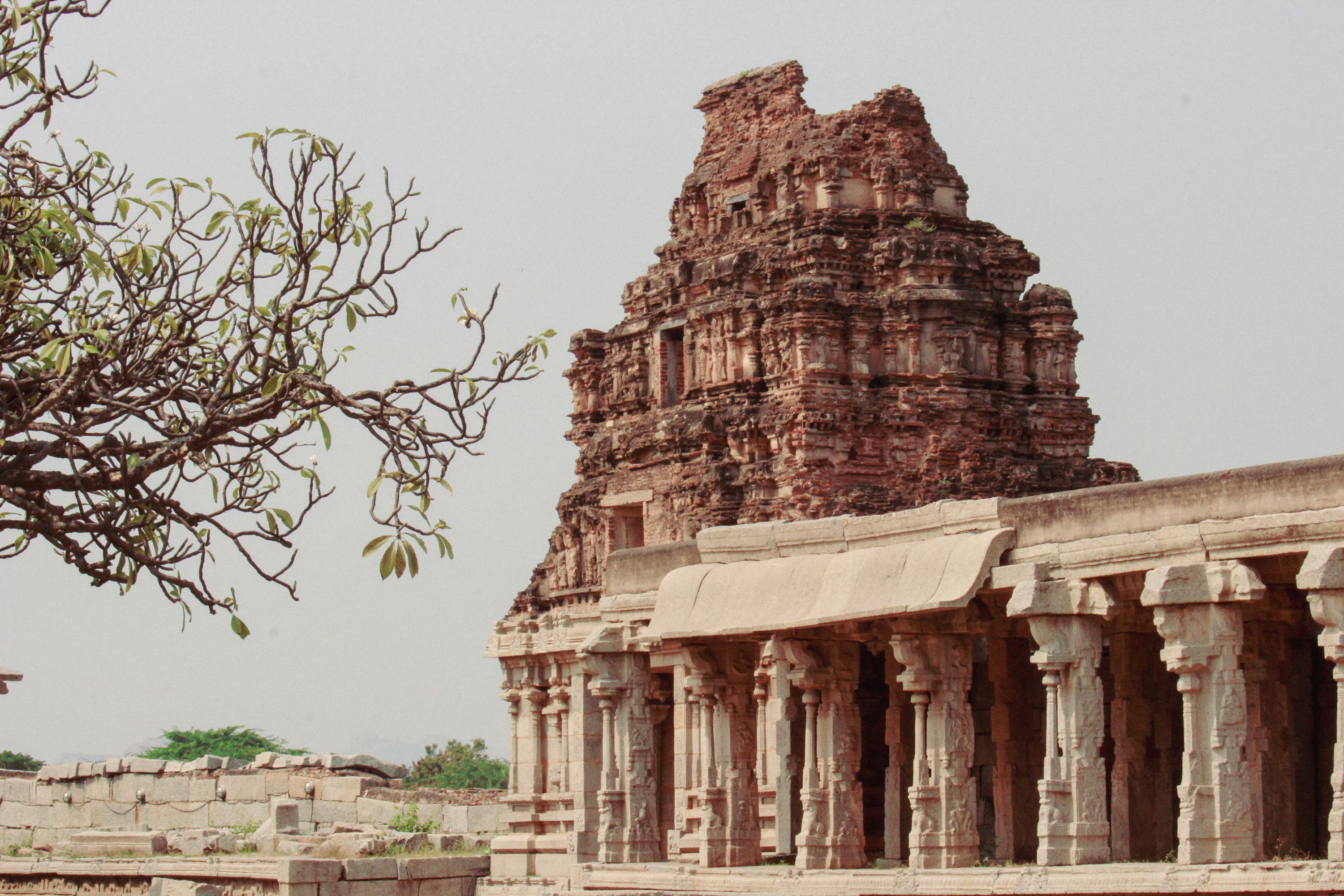
On the windswept Egyptian coast of the Red Sea, the ancient harbor of Berenike once functioned as the principal entry point for long-distance trade between the Roman Empire and the Indian Ocean. Established under the Ptolemies in the third century BCE, Berenike grew under Roman administration into a major customs hub where luxury goods were transferred from sea vessels to camel caravans heading across the Eastern Desert toward the Nile.
While Mediterranean amphorae (two-handled storage jars) and Roman coins have long documented imperial demand for Eastern luxuries, the physical presence of South Indian mariners in the port remained largely inferred through classical literary accounts such as the Periplus Maris Erythraei (a first-century CE Greek merchant guide to Indian Ocean routes). Recent epigraphic analyses of ceramic fragments recovered from Berenike offer direct, primary-source textual evidence confirming that Tamil-speaking merchants lived and traded on the Red Sea coast during the early Roman period.
Scratched on Clay: The Epigraphic Evidence
During archaeological excavations directed by Steven E. Sidebotham of the University of Delaware alongside international teams, garbage middens and harbor deposits yielded thousands of discarded ceramic fragments. Among these sherds were fine wheel-made wares imported directly from South India, as well as locally produced Egyptian amphorae.
The critical discoveries, however, are non-official graffiti. Unlike royal inscriptions cut into stone monuments, these texts consist of short notations scratched onto fired clay post-manufacture.
Epigraphist Iravatham Mahadevan analyzed a key first-century CE potsherd recovered from the Berenike excavations. He identified the script as Tamil-Brahmi (a southern regional variant of the Brahmi script adapted for Old Tamil phonology). The text reads ko-ra-pū-mā-ṇa (Koṟṟapumāṉ). The personal name combines Koṟṟan (a personal name derived from the Old Tamil root for victory) with the honorific suffix -maṉ.
The linguistic structure of the graffito provides decisive diagnostic markers:
- The use of specific Tamil-Brahmi characters designed to represent Dravidian consonants absent from Standard Northern Brahmi.
- Personal name formulations that match contemporary first-century CE inscriptions recorded in Tamilakam (the ancient Tamil region).
- Concordance with Sangam literature, where the personal name Koṟṟan occurs frequently.
Complementary discoveries at nearby Red Sea sites reinforce these findings. At Quseir al-Qadim, another ancient Egyptian port, excavations uncovered an amphora sherd bearing the Tamil-Brahmi graffito pāṉai oṟi ("pot suspended in a rope net"). The word oṟi represents an Old Tamil commercial term for cargo-handling apparatus, matching Dravidian cognates across Central and Southern India.
⚖ Scholarly Debate: Reading the Scripts of Berenike
The interpretation of short, isolated ceramic inscriptions remains a subject of active paleographic debate.
- Evidence shows: Stratigraphic context securely dates the Berenike potsherds to early Roman occupational layers, specifically the mid-to-late first century CE. The ceramic fabrics include both imported Indian red wares and indigenous Nile silt vessels.
- Tradition holds: Classical Western texts and Tamil Sangam poems describe a thriving exchange where Roman merchants traded gold, wine, and glass for South Indian pepper, fine textiles, and gemstones.
- Scholars debate: While mainstream epigraphists agree that Koṟṟapumāṉ represents an Old Tamil name written in Tamil-Brahmi script, some scholars have proposed alternative readings. Epigraphist R. Nagaswamy argued that pūmāṉ could represent a Prakrit loan derived from Sanskrit bhūmān ("landholder" or "chief"). Nagaswamy suggested the graffito might reflect a Middle Indo-Aryan dialect rather than pure Old Tamil syntax. However, the presence of specific Dravidian orthographic features—such as the characteristic Tamil nominal suffixes—leads most epigraphists to maintain the Old Tamil identification.
Commercial Impact on the Indian Ocean Network
The Berenike ostraca—a term used by archaeologists for inscribed pottery sherds used as scratchpads—reframe our understanding of how Indian Ocean trade was organized at the operational level.
Rather than relying entirely on Mediterranean middlemen operating out of Alexandria, South Indian merchant guilds maintained a physical footprint in Red Sea ports. Mariners, factors, and cargo handlers marked their personal belongings and storage vessels in their native script and language while residing in Egypt.
The ceramic evidence shows that Tamil trade terminology crossed the ocean alongside high-value bulk commodities like black pepper. When combined with recent finds in Egypt's Eastern Desert—including Sanskrit visitor inscriptions and Satavahana coin deposits—the Tamil-Brahmi potsherds of Berenike confirm that the first-century Red Sea was an international commercial zone where South Asian scribal and linguistic traditions were actively used.