The Iron of Mayiladumparai: What Micro-Stratigraphy and AMS Dates Reveal About South Asia's Earliest Metallurgy
Excavations at Mayiladumparai in Tamil Nadu push the South Asian Iron Age back to 2172 BCE, challenging long-held models of metallurgical diffusion through secure AMS dating of stratified charcoal.

Rohan Bhattacharya for SwavedaSeptember 13, 2026
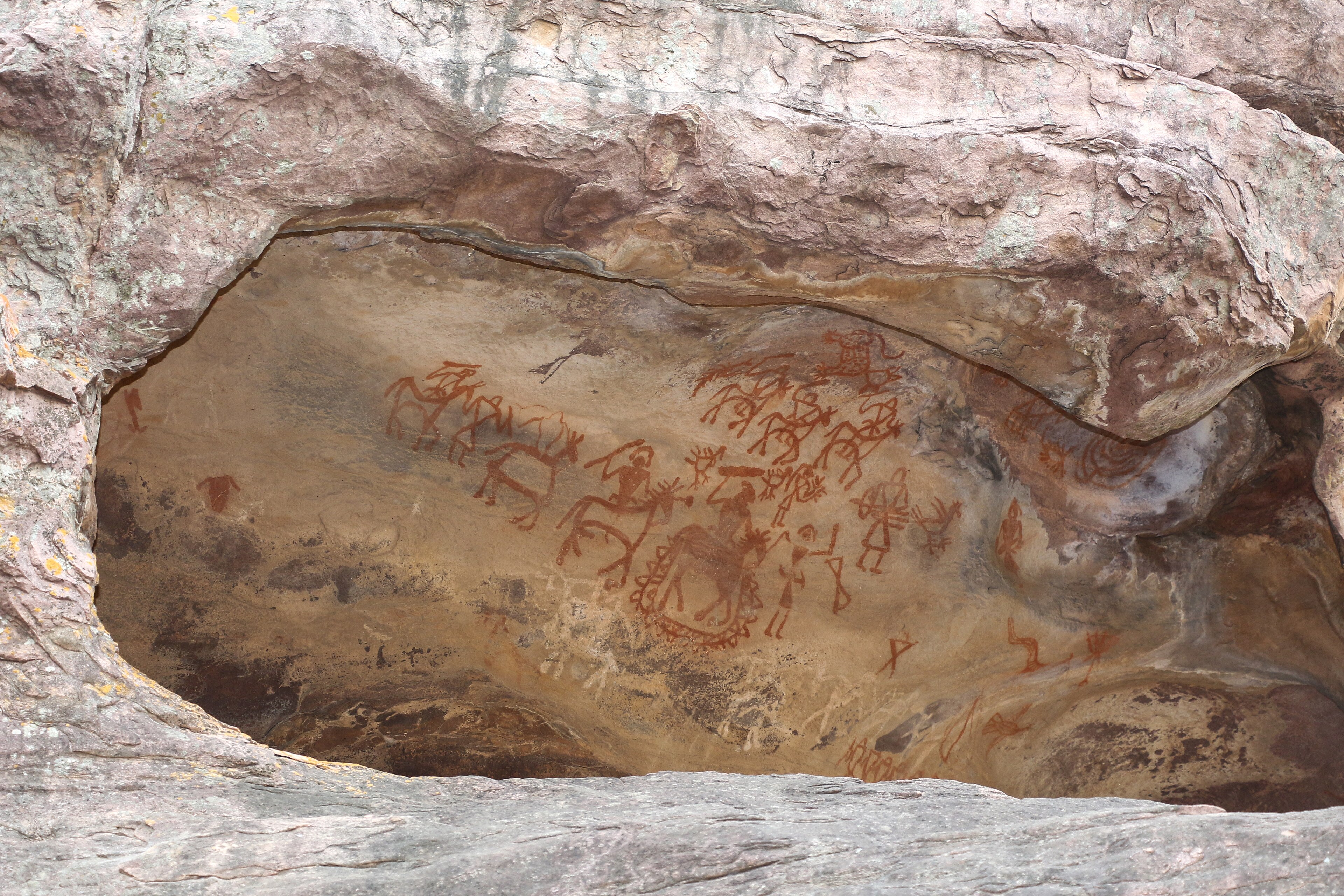
The search for the origins of metallurgy in South Asia has long been troubled by the search for the spectacular. In public discussions, the debate often revolves around grand claims of the "oldest" artifacts, detached from the dirt in which they were buried. But for those who study stratigraphy—the analysis of sequential soil layers—and the plain, broken sherds of black-and-red ware (a distinct type of pottery with a black interior and red exterior), the true story of technological transition is found in the quiet accumulation of silt, ash, and charcoal.
Recent excavations conducted by the Tamil Nadu State Department of Archaeology at Mayiladumparai, a rock shelter site in the Krishnagiri district, have forced a reassessment of when iron working began in the Indian subcontinent. According to a report by researcher K. Rajan published by the Tamil Nadu State Department of Archaeology, Accelerator Mass Spectrometry (AMS)—a highly precise method of radiocarbon dating that measures the ratio of carbon isotopes directly—has pushed the dating of iron at this site as far back as 2172 BCE.
This date is not merely an isolated chronological marker. It challenges established diffusionist models, which held that iron technology traveled to southern India from the north or from West Asia at a much later date. Instead, the evidence shows a long, localized development of pyrotechnology.
The Strata of Mayiladumparai
To understand the significance of the Mayiladumparai dates, one must look at the site's physical sequence. The site preserves a cultural continuity spanning from the Microlithic (small stone tool) period down to the Early Historic period. Scholars debate the exact boundaries of these transitions, but the stratigraphic integrity of the site is remarkably clear.
The excavations revealed five distinct cultural periods. Period I represents the Microlithic phase, while Period II marks the Neolithic (polished stone tool) phase. The crucial transition occurs between Period II and Period III, which represents the Iron Age.
In typical excavations of the mid-twentieth century, the transition between the Neolithic and the Iron Age was often assumed to be abrupt, marked by a sudden replacement of stone tools by metal implements. At Mayiladumparai, however, the micro-stratigraphy reveals a transitional phase. The upper levels of the Neolithic layer show a gradual decline in polished stone axes alongside the appearance of early iron slag (the stony waste matter separated from metals during smelting).
This layer of transition is securely sealed beneath later Iron Age deposits, ensuring that the older materials have not been contaminated by younger charcoal migrating downward through the soil.
The Chronology of Black-and-Red Ware
Central to the discussion of South Asia’s early metal age is the presence of black-and-red ware. This pottery was produced by inverted firing, a technique where the pot is placed upside down in the kiln, causing the interior and the rim to turn black due to a reduction of oxygen, while the exterior turns red under oxidizing conditions.
For decades, articles in journals such as Puratattva (the journal of the Indian Archaeological Society) and Man and Environment (published by the Indian Society for Prehistoric and Quaternary Studies) have debated whether black-and-red ware can be used as a reliable diagnostic marker for the Iron Age. At Mayiladumparai, black-and-red ware appears alongside the earliest iron artifacts in Period III.
The AMS dating of charcoal samples recovered from these specific pottery-bearing layers yielded dates ranging from 2172 BCE to 1615 BCE. When these dates were published, they immediately drew scrutiny from archaeologists accustomed to a more conservative chronology that placed the South Asian Iron Age closer to 1200 BCE.
Skeptics of early iron dates often point to the problem of "old wood." This occurs when charcoal from the inner rings of an ancient, long-lived tree is dated, yielding an age that is centuries older than the actual archaeological event being investigated. However, the recovery of short-lived organic samples, such as charred seeds and twigs, from the same occupational levels at Mayiladumparai helps ground these early dates. The consistent clustering of the radiocarbon determinations across multiple trenches suggests that the dates reflect actual human activity rather than anomalous old wood.
⚖ Scholarly debate: Diffusion versus Independent Origin
The discovery of iron dating to the early second millennium BCE in Tamil Nadu complicates the traditional narrative of metallurgical diffusion. Historically, many scholars argued that iron technology developed in the Hittite Anatolia region of West Asia and spread outward, reaching India around 1200 BCE.
With the Mayiladumparai findings, alongside earlier dates from sites like Raja Nal Ka Tila in the Karmanasa valley and Malhar in the middle Ganga plain, the hypothesis of a single origin point for iron has weakened. The evidence shows that communities in different parts of the subcontinent were experimenting with high-temperature kilns and iron-rich ores independently.
The transition from copper and bronze to iron was not just a change in material; it was a socio-economic shift. Unlike copper, which requires scarce alloying agents like tin, iron ore is widely distributed across the Indian peninsula. The ability to smelt iron allowed for the widespread production of agricultural tools, such as sickles and axes, which in turn facilitated the clearing of dense forests and the expansion of agriculture.
The View from the Trenches
What makes Mayiladumparai compelling to the field archaeologist is not the search for spectacular gold or royal tombs, but the mundane details of the soil profiles. In the excavation reports published by the Tamil Nadu State Department of Archaeology, the association between iron slag, tuyeres (clay pipes used to blow air into a furnace), and finished iron objects like nails and daggers is meticulously documented.
These finds are not intrusive. They lie within well-defined, compacted clay floors associated with postholes, indicating permanent domestic structures. This stratigraphic context proves that the iron was smelted and worked on-site by a resident community, rather than being acquired as rare prestige goods through long-distance trade.
As archaeologists continue to refine the chronology of the southern peninsula through AMS dating, the old frameworks are being dismantled layer by layer. The early iron of Mayiladumparai demonstrates that the technological shifts of the ancient world were far more decentralized, and far older, than once believed.