The Hearth of Kunal: What Micromorphology in Trench KNL-1 Reveals About Early Harappan Fuel Sourcing
A microscopic analysis of archaeological soil layers at Kunal, Haryana, reveals how early settlers shifted from firewood to structured dung-cakes, mapping the domestic transition to urban Harappan life.

Rohan Bhattacharya for SwavedaAugust 18, 2026
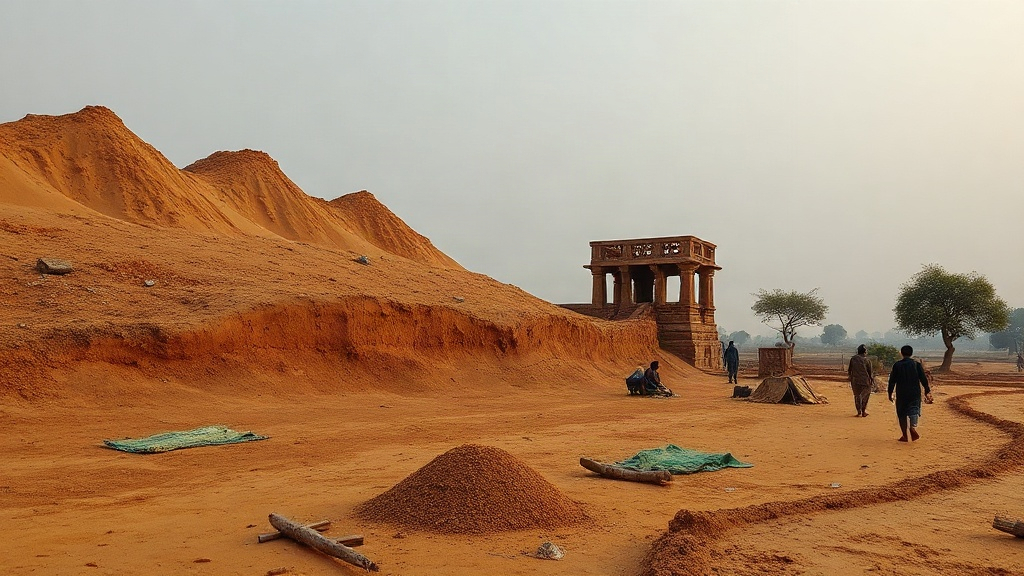
The site of Kunal, located in the Fatehabad district of Haryana, occupies a critical position in the study of the transition from the early pastoral-agricultural phase to the mature urbanism of the Indus Valley Civilization. While spectacular discoveries of silver ornaments and gold beads from the site frequently dominate public discussions, the real transition of daily life is recorded in the microscopic layers of its domestic hearths. A close reading of the stratigraphy—the study of rock and soil layers—within Trench KNL-1 reveals a distinct shift in how early settlers managed their daily energy needs.
Recent laboratory analyses of soil samples from Kunal have moved beyond macro-botanical remains to examine soil micromorphology, which is the study of undisturbed soil samples under a microscope to identify human activities. According to archaeological reports published in Puratattva, the Journal of the Indian Archaeological Society, researchers examining the thin sections of sediments from Trench KNL-1 have identified a clear transition in fuel consumption. Instead of relying solely on forest timber, early settlers during the Hakra-ware phase (the earliest occupational layer at Kunal, dating to the fourth millennium BCE) began using structured dung-cakes and agricultural crop residue. This shift in the combustion stratigraphy offers a highly detailed view of how domestic economies adapted as the regional landscape changed.
The Micro-Stratigraphy of Trench KNL-1
To understand how this transition occurred, archaeologists look at the sequence of occupational deposits. In Trench KNL-1, the lowest cultural layers reveal semi-subterranean pit dwellings, which are circular pits dug into the natural soil. These pits contain central hearths lined with clay. Over time, these pits were filled in, and the settlers transitioned to building rectangular houses of mud bricks on the surface.
Skeptics of quick evolutionary models in archaeology often point out that cultural shifts are rarely sudden. The hearths of Kunal back up this cautious view. In the earliest phases, the microscopic structure of the ash layers contains abundant charred wood fragments, or charcoal. The cellular structure of these charcoal fragments indicates they were derived from local riverine vegetation, including species of Acacia (babool) and Ziziphus (ber).
However, as we move upward through the stratigraphic layers of Trench KNL-1, the character of the hearth fills changes. The charcoal fragments become smaller and less frequent. In their place, micromorphological thin sections reveal high concentrations of spherulites, which are microscopic calcified crystals that form in the digestive tracts of herbivores and are excreted in dung. The presence of these spherulites, alongside fine phytoliths—silica structures formed in plant tissues—derived from cereal husks, indicates that the primary fuel source had shifted from forest wood to prepared dung-cakes mixed with crop processing waste.
Deciphering the Fuel Transition
Archaeologists debate the exact triggers for this fuel transition. One school of thought, often represented in early reports by the Archaeological Survey of India, suggests that regional deforestation caused by the expansion of agriculture and the demand for mud-brick baking reduced the availability of easily collectable firewood. Under this scenario, settlers turned to dung as a substitute out of necessity.
A second perspective, grounded in the environmental reconstructions published in the journal Man and Environment, views this shift not as a desperate adaptation to scarcity, but as a sign of a highly organized, integrated farming economy. As pastoralists domesticated cattle and settled into permanent agricultural routines, the collection and processing of dung became a structured domestic activity. The mixing of dung with agricultural byproducts, such as the chaff of barley and wheat, suggests a deliberate manufacturing process.
The micromorphological evidence from Kunal supports this integrated model. The thin sections show that the dung-derived ash layers are highly uniform. If the settlers had simply been burning loose, dry animal droppings gathered from pastures, the ash would contain a chaotic mix of sand, wind-blown dust, and varied wild plant residues. Instead, the layers show a clean, dense composition of herbivore dung mixed systematically with specific cereal grasses. This suggests the deliberate production of fuel cakes, a domestic technology that remains common in rural South Asia today.
Implications for the Early Harappan Economy
The transition from wood to dung-cakes has significant implications for our understanding of the early Harappan domestic economy. Firewood collection is generally an extractive activity that relies on wild, unmanaged resources. The production of dung-cakes, by contrast, relies on a domestic cycle that links animal husbandry directly to agricultural processing.
This domestic cycle required a predictable supply of livestock waste, which in turn required keeping animals close to the settlement or within organized pens. The presence of dung-derived fuels in the hearths of Trench KNL-1 corresponds stratigraphicly with an increase in the proportion of domesticated cattle bones (Bos indicus) found in the faunal assemblages of the site, as documented in various excavation reports.
Furthermore, the use of crop residue as a tempering agent in dung-cakes indicates that crop processing was happening within or very close to the residential quarters. The agricultural cycle was not just producing food; its waste products were being systematically captured and routed back into the domestic heating and cooking systems.
Looking Beyond the "Oldest" Claims
In South Asian archaeology, there is a frequent temptation to label early sites like Kunal as the "oldest" or "first" representation of urban features. However, the true value of Kunal does not lie in superlative titles. Rather, it lies in these boring, microscopic details preserved within ordinary household hearths.
The micromorphological layers of Trench KNL-1 provide concrete, physical evidence of how prehistoric communities navigated the transition from mobile or semi-sedentary lifeways to highly organized, permanent villages. By reading the thin layers of ash, spherulites, and phytoliths, archaeologists can reconstruct the daily decisions of early farmers. This micro-stratigraphic record shows that the foundation of the Indus Valley's later urban success was built on the careful, domestic reorganization of everyday resources like fuel, long before the first city walls were ever raised.