The Glass Beads of Ahichchhatra: What Pyrotechnology Reveals About Iron Age Gangetic Sites
Compositional analyses of Iron Age glass beads from Ahichchhatra establish clear timelines for Gangetic pyrotechnology, offering an empirical frame for references to glass in the Mahabharata.

Vikram Joshi for SwavedaOctober 27, 2026
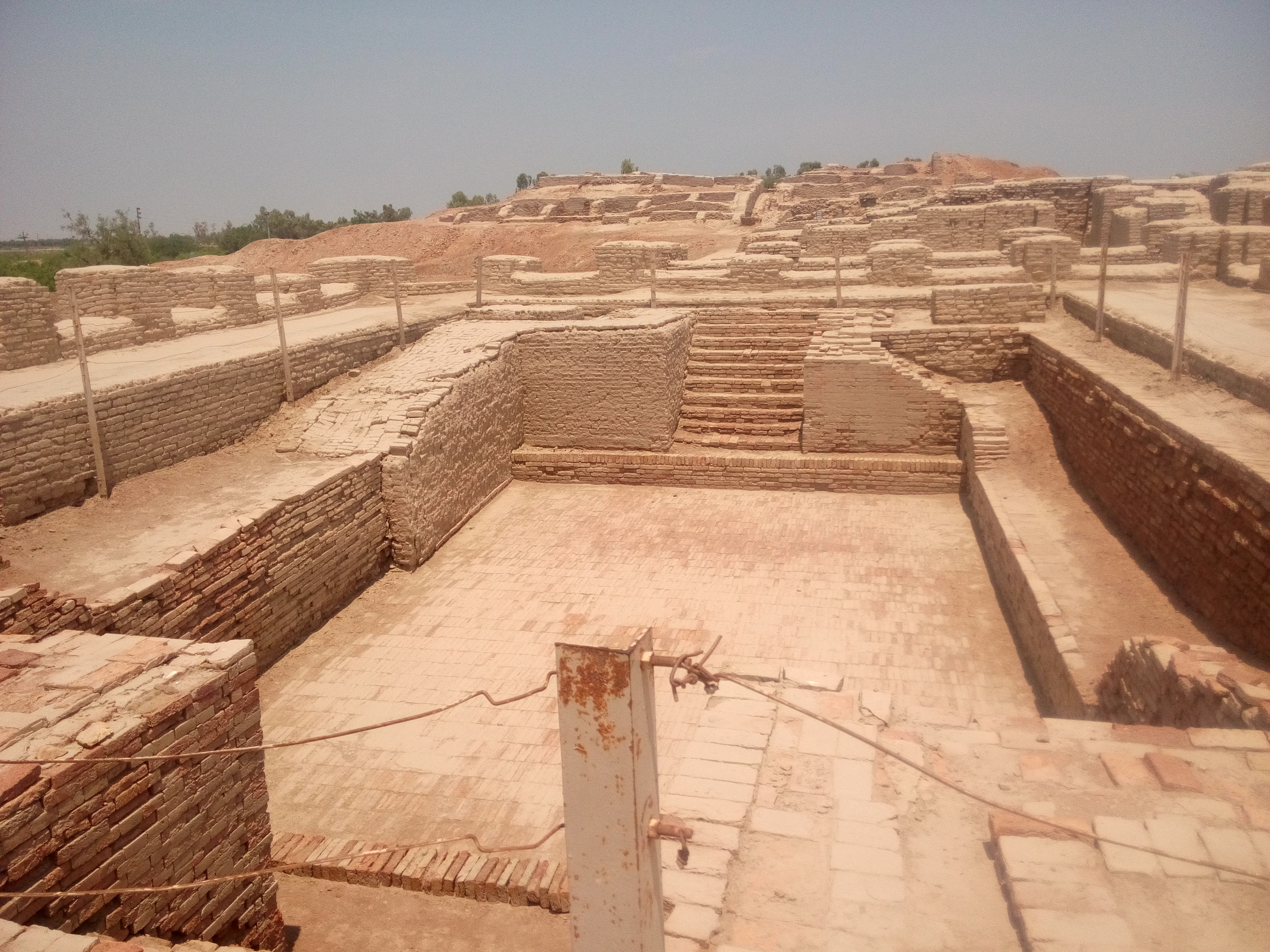
The site of Ahichchhatra in the upper Gangetic plain has long served as a stratigraphic anchor for North Indian archaeology. First excavated systematically by A. Ghosh and K.C. Panigrahi in the 1940s (Heritage), the ancient Panchala capital yielded the distinctive Painted Grey Ware (PGW) ceramics that define the region's Iron Age strata. Modern elemental profiling of glass beads retrieved from these PGW layers is clarifying the technical timeline of Gangetic pyrotechnology—and providing an empirical reference point for analyzing early literary descriptions of glass.
Chemical Signatures in the PGW Strata
The introduction of glass into the material culture of North India was once viewed as a late, post-Vedic development. Early excavations by B.B. Lal at Hastinapur (IGNCA Bulletin) established the stratigraphic order of the upper Ganga basin, placing the PGW period between earlier Ochre Coloured Pottery and the later Northern Black Polished Ware. Glass artifacts, mostly small beads and bangles, appear regularly within these PGW contexts.
Spectroscopic and compositional studies of early Indian glass objects indicate that local artisans achieved high firing temperatures. The chemical recipes of these artifacts rely primarily on soda-lime-silicate mixtures. The presence of plant ash or mineral soda fluxes allowed glassmakers to lower the melting point of quartz sand, while trace oxides of iron and copper were introduced to produce blue and green hues.
This material evidence demonstrates that pyrotechnological knowledge extended beyond basic pottery firing and iron smelting. Controlling kiln atmospheres to melt silicates required dedicated furnace designs capable of reaching temperatures above 1,000 degrees Celsius, confirming that high-heat craft production was established in the Doab during the first millennium BCE.
Material Evidence versus Recited Tradition
The chemical mapping of Iron Age vitrified material provides a physical baseline to compare against passages in early Sanskrit literature, notably the critical edition of the Mahabharata compiled by the Bhandarkar Oriental Research Institute (BORI).

Tradition holds that the epic records events of profound antiquity, preserving memories of the Kuru-Panchala realm. Scholars debate how closely the material culture described in the text aligns with specific archaeological horizons. In the constituted text of the epic, terms such as kaca (glass or quartz) and sphatika (rock crystal) appear in descriptions of ornaments, architectural elements, and optical illusions—most famously in the hall of illusions (Sabha Parva) where smooth surfaces are mistaken for water.
A critical analysis of these lexical terms highlights a clear technical evolution:
- Tradition holds that grand glass architecture existed during the epic era.
- Evidence shows that Iron Age sites like Ahichchhatra and Hastinapur produce small personal ornaments, such as glass beads and bangles, rather than structural glass elements.
- Scholars debate whether early occurrences of the word kaca originally designated natural quartz and rock crystal before shifting to denote manufactured glass.
The physical assemblage at Ahichchhatra shows that while pyrotechnology was advanced enough to produce vitrified beads, structural glass manufacturing was absent in the PGW period. The elaborate glass halls mentioned in narrative passages reflect poetic hyperbole or later literary insertions, composed when large-scale glass production became more widespread in the Early Historic period.
Mapping the Spread of Vitrified Artifacts
Chemical signatures also trace trade networks across the Gangetic plain. High-alumina soda glass beads discovered at Ahichchhatra share raw material profiles with artifacts found at contemporary sites across Uttar Pradesh and Haryana, including Mathura, Kausambi, and Bhagwanpura.
The uniformity of these chemical compositions points to localized production hubs that distributed raw glass ingots or finished beads throughout the river valleys. Rather than relying on imported luxury goods from Western Asia, local glassmakers utilized native sands and plant-ash fluxes.
By establishing the precise composition of these early silicate artifacts, archaeometric research anchors the study of ancient North Indian material culture in verifiable physical data. The glass beads of Ahichchhatra demonstrate that while the poetic descriptions in the epic tradition exaggerate scale, they rest on a genuine, historically grounded tradition of pyrotechnological innovation in the Ganga-Yamuna Doab.