The Genomes of Swat: What Bronze Age Skeletal DNA Reveals About Steppe Ancestry and Language Spread
A genetic timeline built from ancient skeletons in northern Pakistan places the arrival of Central Asian Steppe ancestry between 1200 and 800 BCE, providing empirical bounds for models of Indo-Aryan language dispersal.

Dr. Anil Patel for SwavedaOctober 18, 2026
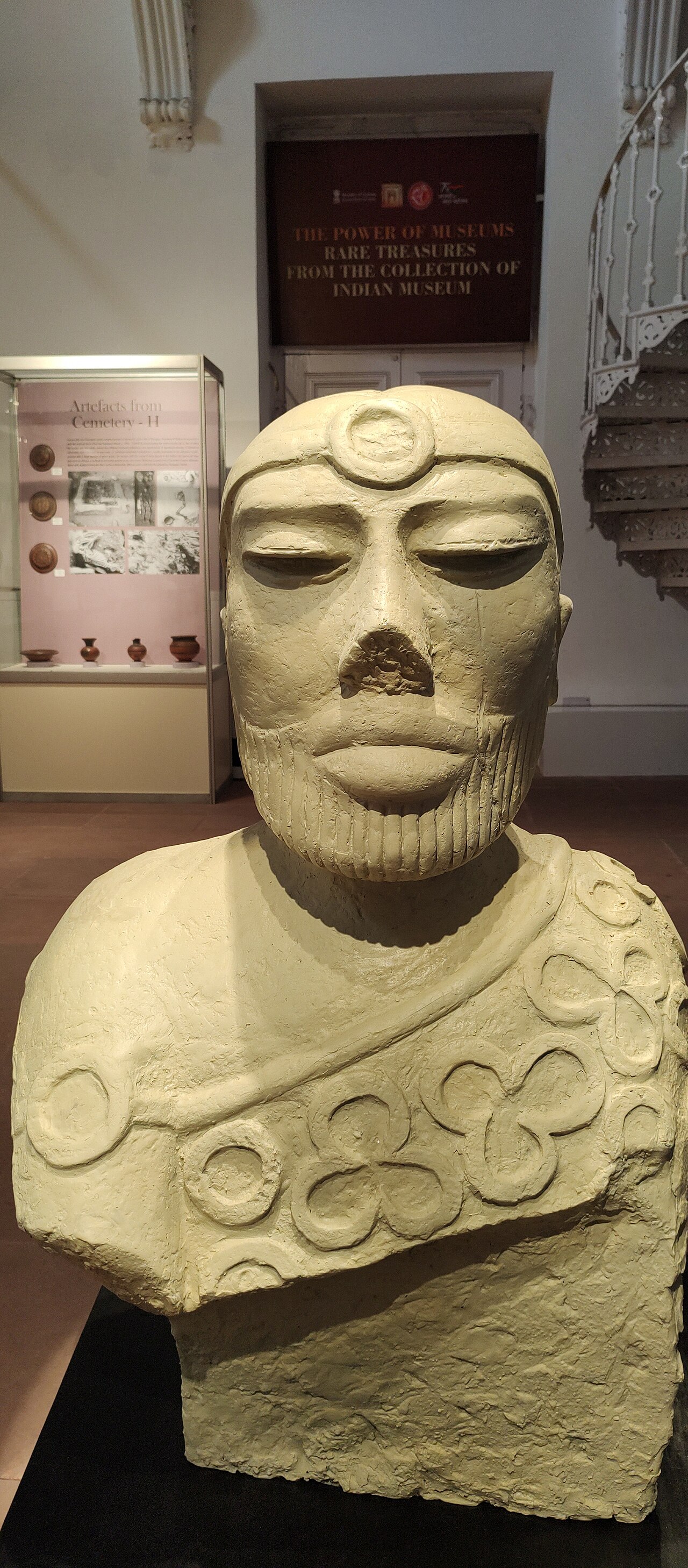
In the high mountain valleys of northern Pakistan, where the Swat River cuts through granite gorges before meeting the Kabul, lies a vast network of ancient graveyards. Excavated over decades by the Italian Archaeological Mission at sites including Katelai, Loebanr, Udegram, and Aligrama, these cemeteries preserved human remains spanning the Late Bronze Age, the Iron Age, and historical periods.
When geneticists extracted ancient DNA from these skeletal remains, they uncovered a temporal record of human movement. A landmark genetic study led by Vagheesh Narasimhan and colleagues in Science analyzed genome-wide data from 523 ancient individuals across Central and South Asia. The dataset included dozens of skeletons buried in the Swat Valley between roughly 1200 BCE and 1 CE. The genomic profile of these individuals provided precise genetic timelines for the arrival of Steppe pastoralist ancestry in South Asia.
The Tripartite Genetic Baseline
To read the autosomal DNA (the 22 pairs of non-sex chromosomes inherited from both parents) of an ancient skeleton, population geneticists break the sequence into ancestral components. Modern and ancient populations in South Asia are modeled as mixtures of three distinct ancestral lineages:
- Ancient Ancestral South Indian (AASI): A deeply divergent lineage related to indigenous South Asian hunter-gatherers.
- Iranian Farmer-related: An ancestral component related to early agriculturalists from the Zagros Mountains and Iranian plateau.
- Central Steppe Pastoralist: Ancestry derived from Bronze Age pastoral communities of the Eurasian steppe, such as the Sintashta and Andronovo cultures.
Before the second millennium BCE, genetic sampling across the region shows no trace of Steppe pastoralist ancestry in northern South Asia. Analysis of an ancient individual buried at Rakhigarhi, published by Vasant Shinde and colleagues in Cell, revealed an ancestral profile composed entirely of Iranian farmer-related and AASI lineages, with zero Steppe pastoralist ancestry.
The Swat Time Transect (1200–800 BCE)
The ancient genomes from the Swat Valley provided the first direct, dated evidence of Steppe pastoralist ancestry south of the Hindu Kush.
Skeletons dated between 1200 BCE and 800 BCE from the Swat Protohistoric Graves carried a distinct genetic signature. Their genomes were modeled as a combination of local Indus Valley-related ancestry (a mix of Iranian farmer-related and AASI lineages) and approximately 15% to 20% Central Steppe pastoralist ancestry.
This finding established a firm terminus ante quem (the point before which an event must have occurred): by 1200 BCE, groups carrying Eurasian Steppe ancestry were living, marrying, and being buried in the Swat Valley.
Data from sex chromosomes revealed a specific social pattern during this initial period. Genetic analysis showed that autosomal Steppe ancestry was distributed across the population, but only a small fraction of male lineages belonged to the Y-chromosome haplogroup R1a1a-Z93, which is strongly associated with Bronze Age Steppe pastoralists. In the earliest Swat samples, Narasimhan et al. recorded that roughly 5% of male individuals carried the R1a-Z93 Y-chromosome marker, while carrying higher proportions of Steppe-derived ancestry on their X chromosomes (which are inherited twice as often from mothers as from fathers). This profile indicates that the initial integration of Steppe ancestry into the local Swat population involved significant female-mediated gene flow.
Over the subsequent centuries (800 BCE to 1 CE), the overall proportion of Steppe-related ancestry stabilized in the valley's local gene pool, showing continuity across generations even as new political empires—including the Achaemenid, Mauryan, and Indo-Greek periods—exerted control over the region.
Empirical Bounds for Language Models
The genetic timeline established by ancient DNA intersects directly with historical linguistics. Comparative linguistics establishes that Indo-Aryan languages (including Vedic Sanskrit and its modern descendants) belong to the wider Indo-European language family. The shared vocabulary for wheeled transport, horse breeding, and metallurgy links early Indo-Iranian branches to Bronze Age cultures of the Eurasian steppe.
The genetic data does not directly trace spoken words, but it tracks the physical movements of human carriers.
⚖ Scholarly debate: The historical relationship between genetic admixture timelines and the dispersal of Indo-Aryan languages remains an active subject of academic debate among archaeologists, geneticists, and linguists.
-
The Migration Model: Geneticists such as David Reich and Vagheesh Narasimhan, alongside linguists like Asko Parpola, argue that the arrival of Steppe-derived ancestry in northern South Asia between 1500 BCE and 1200 BCE represents the biological vector for the introduction of Indo-Aryan languages into the subcontinent. Under this framework, pastoralist groups moving south through Central Asia brought both their genetic signature and early Indo-Iranian dialects, which subsequently spread and diversified across northern India.
-
The Indigenous / In-Situ Model: Alternative models, supported by archaeologists such as B.B. Lal and Dilip Chakrabarti, emphasize cultural and linguistic continuity within the Indian subcontinent. Proponents of this view argue that the archaeological record shows structural continuity from the Harappan period to the Iron Age without sudden site destructions. They suggest that linguistic shifts occurred through long-distance trade, cultural diffusion, or far earlier demographic movements, treating the arrival of late Steppe ancestry as a localized demographic contact that did not dictate the primary language map of South Asia.
By establishing that Steppe pastoralist ancestry was absent in the Indus Valley Civilization prior to 1900 BCE and consistently present in the Swat Valley by 1200 BCE, ancient DNA provides quantitative boundaries for both hypotheses. The skeletal evidence from Swat anchors the biological calendar, leaving the interpretation of cultural and linguistic transmission to be tested against the stratigraphy of the ground.