The Etymology of *Sarṣapa*: How Mustard Seed Terms Triangulate Pre-Vedic Botanical Substrates
The Sanskrit word for mustard, sarṣapa, lacks Proto-Indo-European roots. Its appearance alongside Harappan archaeobotanical finds offers evidence of pre-Vedic farming vocabulary absorbed into early Indo-Aryan texts.

Asha Naidu for SwavedaNovember 26, 2026
Listen to this article · 4 min · Read by an AI voice
The word sarṣapa (mustard seed) carries a curious linguistic fingerprint. In Classical Sanskrit, it names the tiny, pungent seed of Brassica juncea (Indian mustard), used both as a culinary spice and as an ancient unit of weight (Wisdom Library). Yet when historical linguists trace the word back through the Indo-European language family, the trail goes cold.
In Manfred Mayrhofer’s Etymologisches Wörterbuch des Altindoarischen (Etymological Dictionary of Old Indo-Aryan), sarṣapa is classified as a non-Indo-European culture-word (SOAS Bulletin). It has no reconstructable Proto-Indo-European root, nor does it fit the standard phonological patterns of inherited Vedic vocabulary. Instead, evidence shows that sarṣapa entered early Indo-Aryan as a loanword from a pre-existing local language—a botanical substrate term absorbed by pastoralist communities as they settled into the agricultural landscapes of northwestern South Asia.
Linguistic substrate analysis examines the foreign words that survive in a language after it displaces or merges with another. When Indo-Aryan speakers moved across northwestern India, they encountered indigenous farming populations who were already cultivating local oilseeds, pulses, and grains. The pastoral newcomers adopted the local crops along with their native names.
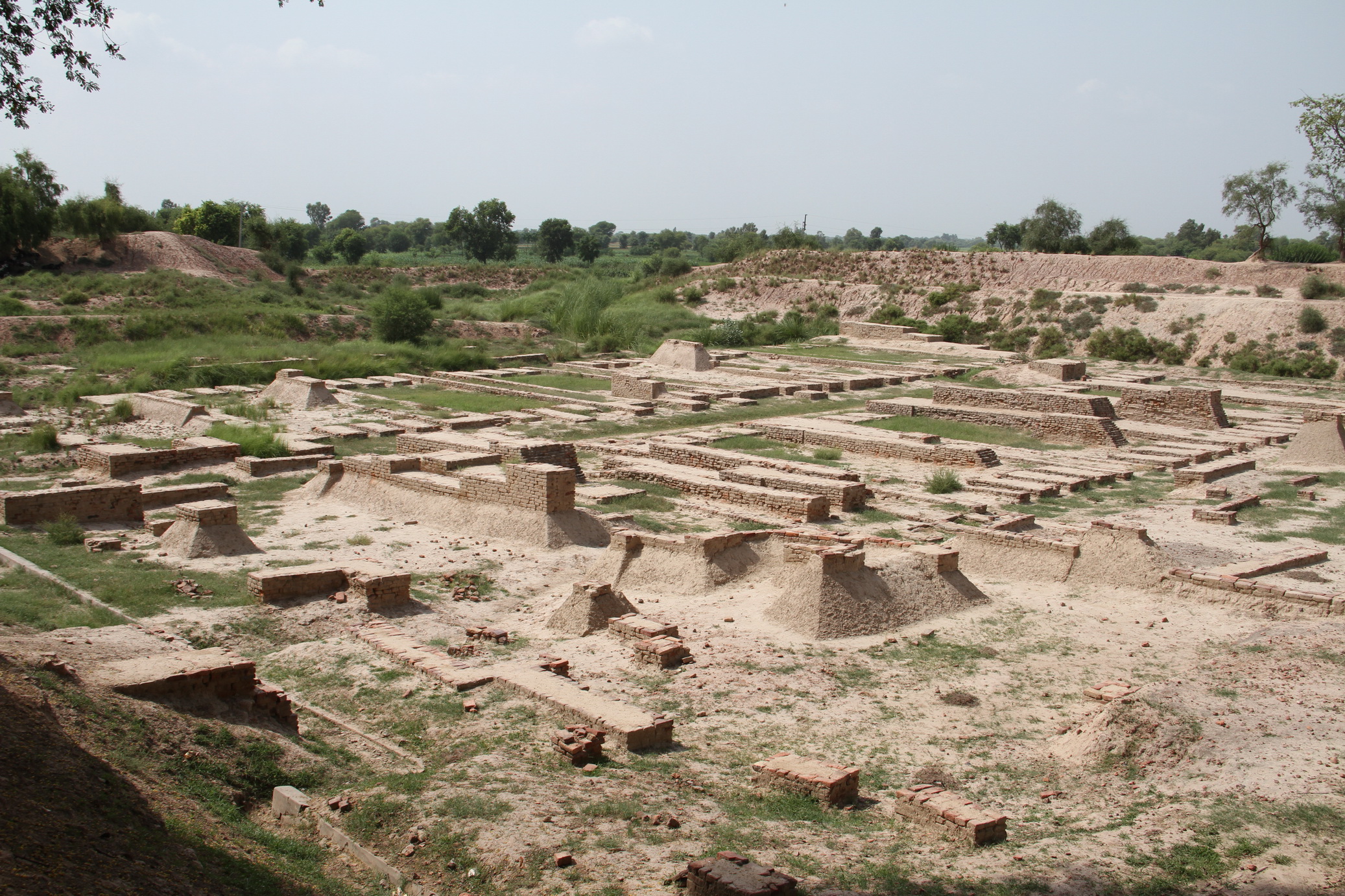
The botanical record confirms that mustard was established in South Asia long before the composition of the earliest Vedic texts. Archaeobotanical excavations across Indus Valley sites—such as Chanhu-daro (Archaeobotany of Africa and India), Banawali (Sidestone Press), and Rojdi—have yielded charred seeds of Brassica juncea (ResearchGate). Evidence shows that Harappan farmers cultivated mustard as a winter crop, often intercropping it with barley (Hordeum vulgare) (PMC).
When early Indo-Aryan speakers established agricultural communities in the Indus and Ghaggar-Hakra basins, they took up the cultivation of these established winter oilseeds. Philological analysis shows that while early layers of the Rigveda focus heavily on pastoral life and crops like yava (barley), later Vedic texts such as the Atharvaveda and late ritual manuals regularly mention sarṣapa (Project MUSE).
The exact origin of the substrate word remains a subject where scholars debate. Indologist Michael Witzel and historical linguist Colin Masica have analyzed various layers of non-Indo-European loanwords in Old Indo-Aryan (Scribd). Scholars debate whether sarṣapa derives from an ancient Austroasiatic (Proto-Munda) substrate, a lost local language of the Indus region, or a broader regional trade term.
Linguist W. B. Henning noted parallel forms across Iranian languages—such as Old Iranian *sinšapa- (Scribd)—suggesting that sarṣapa may have circulated as a wide-ranging Central and South Asian "Wanderwort" (migratory loanword) (OAPEN Library). Related forms traveled both east and west across ancient trade networks (OAPEN Library), eventually yielding cognates across distinct language families.
The survival of sarṣapa highlights a key pattern in South Asian historical linguistics: while core grammatical structures and pastoral terms in Indo-Aryan remained Indo-European, the technical vocabulary of regional agriculture—including localized crops like mustard, cotton, and specific millets—was borrowed directly from indigenous farming cultures (ResearchGate). Through these lingering loanwords, ancient agricultural knowledge was preserved inside the lexicon of early South Asian literature.