The Etymology of *Kārpāsa*: Paleobotanical Cotton Residues and Pre-Vedic Textile Vocabulary
How mineralized Gossypium fibers from early South Asian sites intersect with comparative Dravidian, Austroasiatic, and Indo-European philology to trace the history of the word kārpāsa.

Asha Naidu for SwavedaNovember 23, 2026
The English word cotton reached modern European languages through Arabic qutn, but classical antiquity knew the fiber by a different family of names. Classical Greek kárpasos (flax or fine cotton) and Latin carbasus (fine linen or sailcloth) trace directly back to Old Indo-Aryan kārpāsa (cotton or cotton cloth) (ScholarSpace).
How that botanical loanword entered Sanskrit—and where it came from before appearing in North Indian literary texts—presents a complex puzzle at the intersection of physical plant remains and historical linguistics.
The Physical Evidence: Gossypium in the Soil
Archaeological evidence shows that species of Gossypium (the plant genus containing all cottons) were processed in the northwestern region of the Indian subcontinent millennia before the composition of classical Sanskrit lexicons.
At the Neolithic site of Mehrgarh in modern-day Balochistan, metallographic analysis of mineralized threads preserved inside a corroded copper bead revealed the presence of Gossypium fibers (Harappa.com). Research conducted by Christophe Moulherat and colleagues confirmed that these fibers date to the sixth millennium BCE, establishing the earliest physical record of cotton usage in the Old World (Harappa.com).
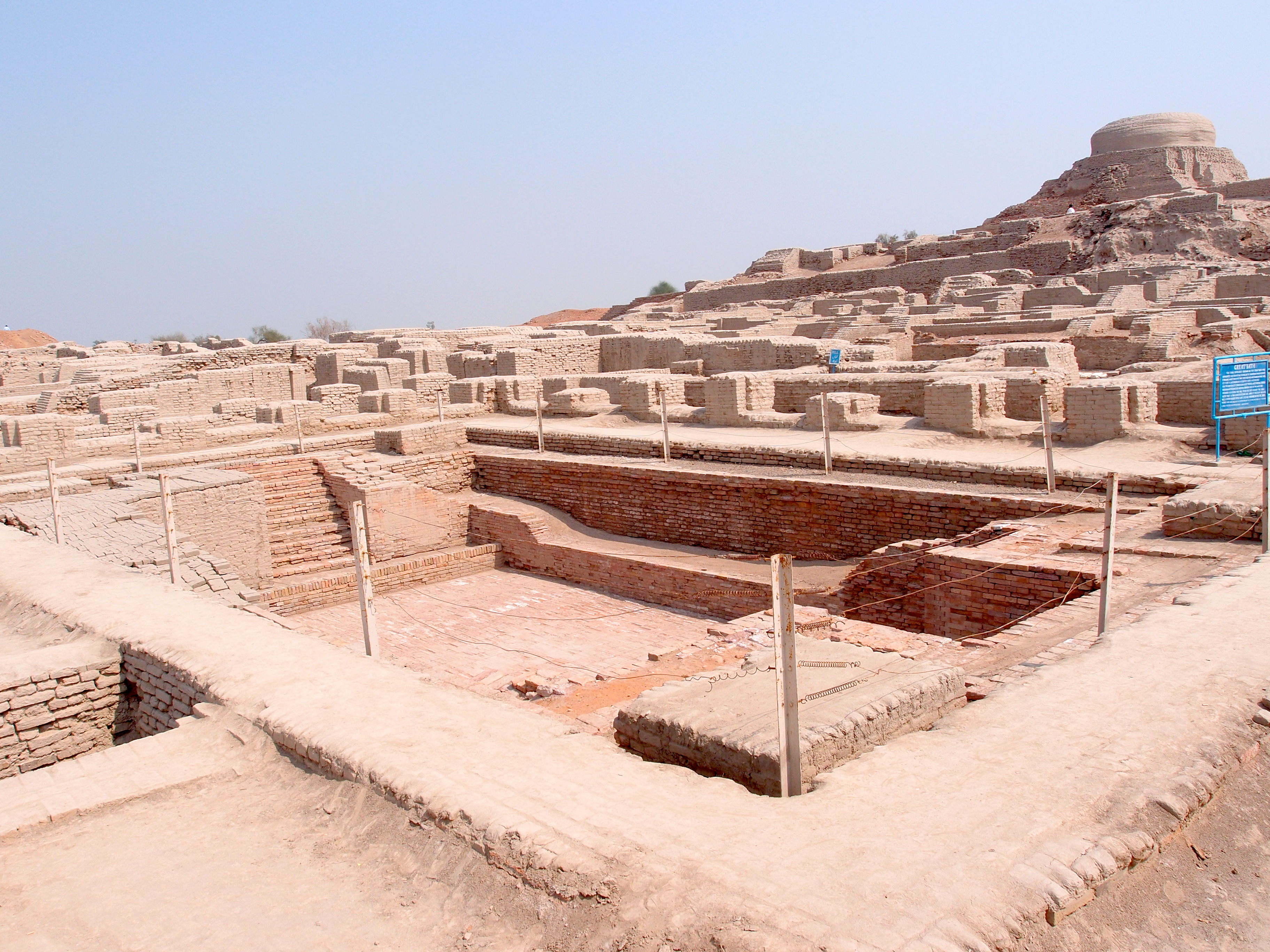
By the urban Mature Harappan period (circa 2600–1900 BCE), cotton processing was widespread across the Indus region (ThePrint). Excavations at Mohenjo-daro by Sir John Marshall in the 1930s uncovered traces of woven cotton cloth preserved against a silver vase (ThePrint).
While material plant remains prove early cultivation, physical artifacts carry no linguistic labels. Archaeobotanical dates cannot be assumed to match the chronology of surviving written texts.
The Literary Attestation: Absence in Early Texts
In Old Indo-Aryan philology, kārpāsa does not appear in the Rigveda, the earliest layer of Vedic literature. The Rigveda frequently mentions weaving (ve), threads (tantu), and garments (vāsas), but these references refer primarily to sheep's wool (ūrṇā).
The word kārpāsa enters the written record later, appearing in post-Rigvedic texts like the Sūtra literature and early medical and legal treatises.
Because kārpāsa lacks a Proto-Indo-European root, historical linguists class it as a loanword into Sanskrit.
Philological Substrates: Austroasiatic, Dravidian, or Lost Pre-Vedic?
Scholars debate the exact source language from which Sanskrit borrowed the term.
The Austroasiatic Proposal
French linguist Jean Przyluski proposed an Austroasiatic etymology (Pre-Aryan and Pre-Dravidian in India). Przyluski noted related forms across Mon-Khmer and Austroasiatic speech communities, such as Khmer kapaas (cotton) and Proto-Mon-Khmer reconstructive forms like *kpaas (Pre-Aryan and Pre-Dravidian in India).
Under this hypothesis, the root word connected to carding or husking plant fibers moved westward across northern South Asia, entering Old Indo-Aryan as kārpāsa (Pre-Aryan and Pre-Dravidian in India).
Linguist Franklin Southworth also grouped kārpāsa among agricultural and botanical loanwords borrowed into early Indo-Aryan from local non-Indo-European plant vocabularies (Governance Now).
The Dravidian or Regional Substrate
Other philologists evaluate a Dravidian origin or an unclassified pre-Indo-Aryan substrate.
Dravidian languages preserve distinct vocabulary for cotton, such as Tamil parutti (cotton) or panju (raw cotton fiber), alongside regional lexical items (r/Dravidiology).
Because early Indus Valley languages left no bilingual inscriptions, scholars debate whether kārpāsa originated in an early Dravidian dialect, an Austroasiatic language, or an extinct regional language family (r/IndianHistory).
Modern Middle Indic to Global Loanword
As Old Indo-Aryan evolved into Middle Indo-Aryan (Pali and Prakrit), kārpāsa assimilated phonetically into kappāsa or kapās. This form survives directly in modern South Asian languages, including Hindi kapās (cotton).
As Indian textiles traveled along ancient trade routes, the word spread into foreign lexicons:
- Hebrew: karpas (fine cotton or linen cloth)
- Greek: kárpasos (cotton or fine flax fabric)
- Latin: carbasus (flax or fine cloth)
Textile remains recovered from early archaeological sites provide clear physical evidence of South Asian cotton cultivation (Harappa.com).
Comparative philology traces how a non-Indo-European plant name was adopted into Sanskrit as kārpāsa (ScholarSpace), subsequently spreading across Mediterranean and Near Eastern vocabularies alongside the traded fabric itself.