The Epigraphy of Baset: How Early Cambodian Polities Adapted Indian Statecraft
Recent archaeological excavations and epigraphic analyses at Baset in Battambang Province demonstrate how early historic Southeast Asian communities selectively adopted Sanskrit elite models.

Vikram Joshi for SwavedaOctober 19, 2026
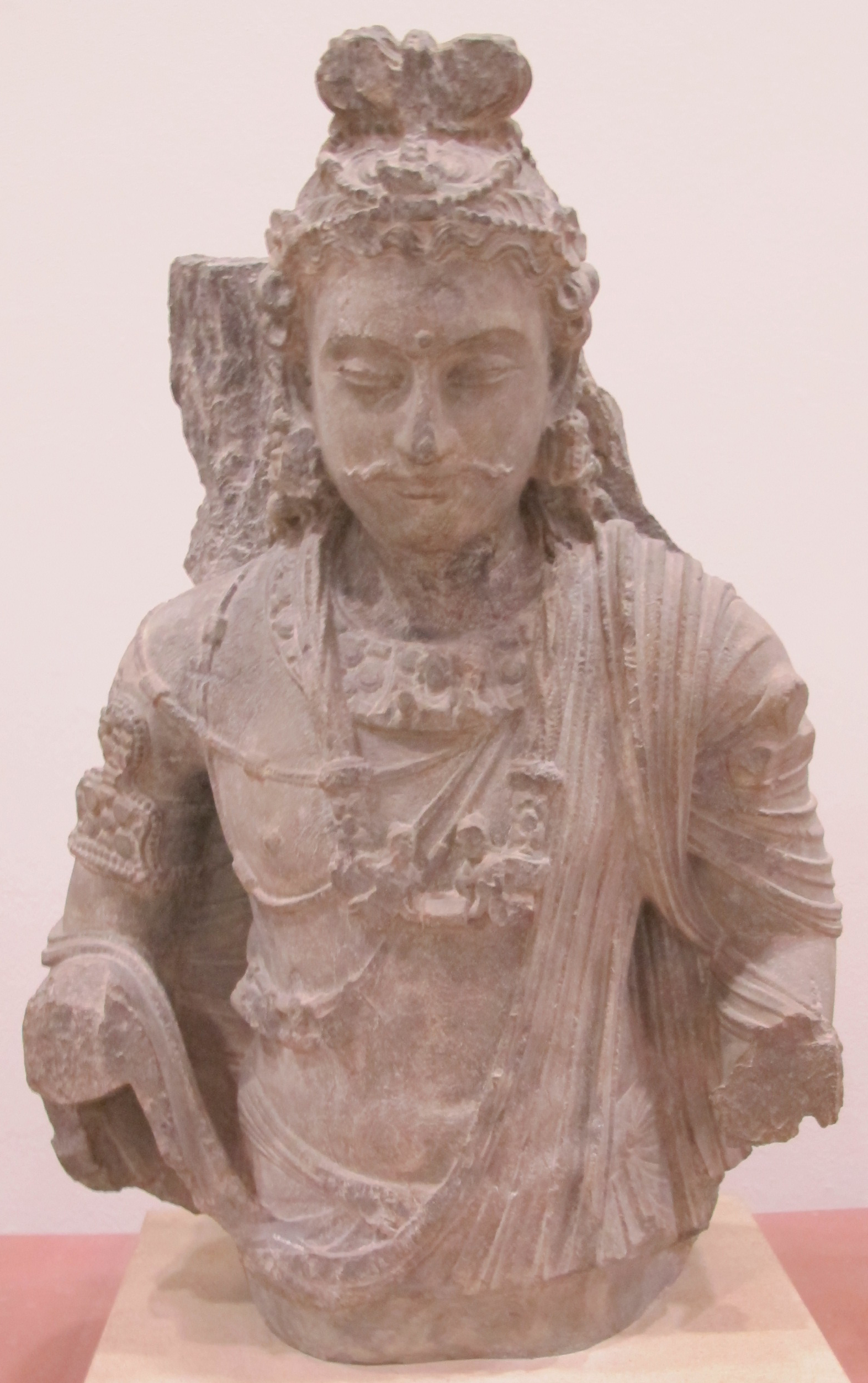
For decades, popular accounts of Southeast Asian history framed the spread of South Asian culture as a passive reception, a process older scholarship termed "Indianization." Physical evidence and epigraphic analysis from northwestern Cambodia present a far more dynamic picture. At the site of Baset (also known as Prasat Baset) in Battambang Province, multi-year excavations by the P'teah Cambodia project—co-directed by Alison Kyra Carter of the University of Oregon and Miriam T. Stark—alongside bilingual inscriptions reveal that local elites intentionally selected, adapted, and integrated South Asian political idioms into an existing indigenous landscape.
Evidence shows that Baset was not an empty clearing chosen by 11th-century royal decree, but a long-inhabited prehistoric and early historic settlement. Field surveys and ceramic analyses trace household occupations that spanned centuries prior to the construction of state monument architecture under the Khmer monarch Suryavarman I in 1018 CE. The stratigraphy beneath the modern village demonstrates that indigenous agricultural communities maintained deep regional trade networks well before elite Sanskrit epigraphy appeared on sandstone lintels and doorframes.
The epigraphic record at Baset highlights how local authorities wielded Sanskrit alongside Old Khmer. A notable example appears on the sandstone doorframes of the southern gate of Baset, where parallel texts record legal and religious land transactions. The inscription records an event during the reign of Suryavarman I, dated to 1036 CE. It features 18 lines composed in 16 metric verses of Sanskrit alongside 25 lines in Old Khmer, followed by a second entry carved in 1042 CE containing 45 lines of Old Khmer.
In these inscriptions, Sanskrit functions as a high-prestige, cosmopolitan register used for invocation, genealogical framing, and expressing legal legitimacy in standard poetic meters. Meanwhile, the vernacular Old Khmer text manages the practical details: boundary markers, economic values of lands purchased with precious objects, lists of local witnesses, and local administrative duties. Rather than replacing indigenous systems, high Sanskrit phrasing was fitted onto existing customary law regarding property rights and ancestral lineage.
The site's iconography reflects a similar process of selective adaptation. Sandstone lintels recovered from Baset—such as the mid-7th-century Prei Kmeng style lintel depicting Viṣṇu Anantaśāyin (the sleeping Vishnu on the serpent Shesha) and the birth of Brahma—utilize South Asian iconographic motifs. Yet art historical evaluations, including those documented in The Metropolitan Museum of Art's Lost Kingdoms exhibition catalogue, note that the execution, stylistic details, and architectural framing are uniquely regional. Local artisans drew from shared pan-Asian religious imagery while developing distinct Khmer aesthetic conventions.
Scholars debate the precise administrative relationship between provincial centers like Baset and the central royal courts. One perspective holds that the deployment of imperial Sanskrit epigraphy and formal state titles reflects a tight, centralized bureaucratic control exerted directly from the capital. Another view suggests that provincial elites operated with substantial autonomy, adopting royal epigraphic styles primarily to bolster their own local authority and prestige in property disputes.
What remains clear from the material evidence at Baset is that South Asian administrative and linguistic traditions were not imposed through conquest or passive reception. Tradition holds that elite ritual and legal practices moved intact across the Bay of Bengal, but archaeology shows a nuanced process of local choice. Southeast Asian communities actively evaluated, adopted, and reshaped external epigraphic models to suit their own political and economic realities.