The Bronze of Brahmagiri: What Lead Isotope Ratios Reveal About Early Deccan Metallurgy
Archaeometallurgical analysis of Western Deccan bronzes challenges old assumptions of southern Indian resource self-sufficiency, revealing complex medieval trade networks for copper and tin.
Rohan Bhattacharya for SwavedaAugust 23, 2026
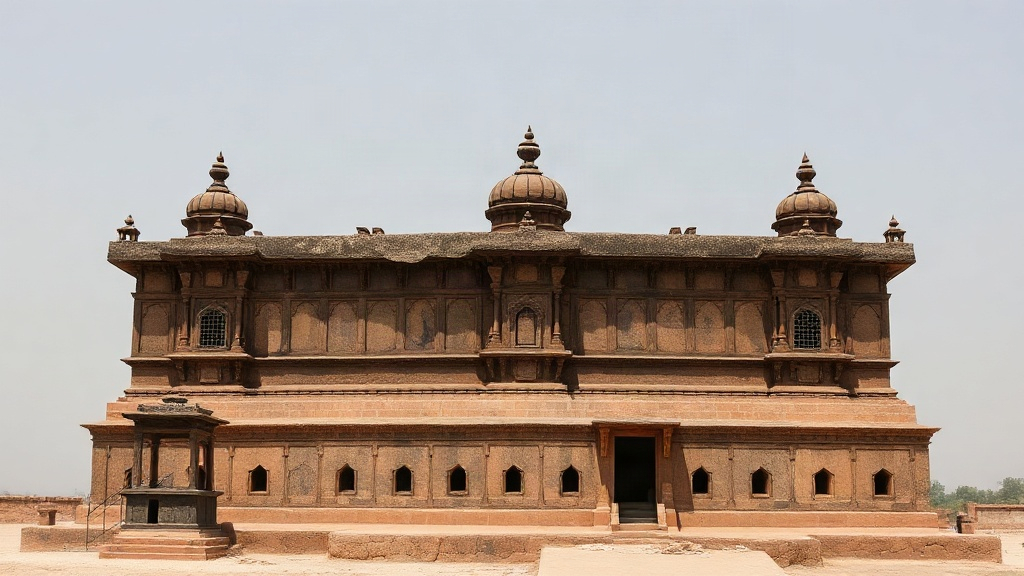
In the study of ancient Indian metallurgy, spectacular museum pieces often overshadow the fragmentary evidence left behind in the soil. For decades, the dominant narrative in South Asian archaeology suggested that early historic and medieval metalworkers in the southern peninsula relied almost entirely on local ore deposits. However, recent scientific inquiries into the chemical composition of copper-alloy artifacts are reshaping this view.
By utilizing lead isotope analysis, archaeometallurgists are mapping the geological origins of the raw materials used by early medieval trade guilds. This scientific method acts as a chemical fingerprint. Because lead isotope ratios remain unaltered from the ore deposit to the smelted artifact, they allow researchers to match archaeological bronze with specific mining zones.
The Stratigraphy of Metal at Brahmagiri
Brahmagiri, a site in Karnataka famous for its deep stratigraphic sequence explored by Mortimer Wheeler in the mid-twentieth century, has long served as a reference point for Deccan chronology. Wheeler’s excavations established a sequence running from the Neolithic period through the Megalithic culture and into the early historic Andhra state. Reports published in Ancient India and subsequent reviews in the journal Puratattva have meticulously documented the pottery and iron implements recovered from these layers.
Yet, the bronze and copper-alloy objects from the Western Deccan have historically received less analytical attention than their iron counterparts. Early reports by the Archaeological Survey of India (ASI) categorized these copper alloys broadly, without delving into their chemical signatures. To understand how these alloys were made, researchers must look at the transition from copper to bronze—specifically, the deliberate addition of tin, an element that is notoriously scarce in the Indian subcontinent.
While local copper deposits exist in the Chitradurga district of Karnataka and the broader Dharwar Craton, tin is a different matter. The lack of substantial tin deposits in southern India has always posed a puzzle for archaeologists studying high-tin bronzes. Historically, scholars debated whether these early metalsmiths utilized small, now-depleted local alluvial tin pockets or if they were integrated into wider trade networks.
Fingerprinting Ore Sources via Lead Isotopes
To resolve these debates, modern archaeometallurgy relies on the precise measurement of lead isotopes. Lead occurs as a trace element in most copper and tin ores. Because the isotopic composition of lead varies depending on the geological age of the ore body, measuring the ratios of lead-206, lead-207, and lead-208 allows laboratory technicians to compare artifacts with known mining regions.
Recent studies published in journals such as Antiquity and Man and Environment have begun to assemble an isotopic database for South Asian ore deposits. This database includes the copper mines of the Aravalli hills in Rajasthan, the Singhbhum shear zone in Bihar, and the smaller mineralizations in the Deccan and Andhra regions.
The isotopic ratios of several copper-alloy artifacts recovered from Western Deccan sites do not match the nearby Dharwar copper mines. Instead, the isotopic signatures point to more distant sources. Some bronzes show a high degree of correlation with ore deposits in Rajasthan, indicating that long-distance overland trade networks were supplying raw copper to southern guilds as early as the late historic period.
Even more surprising is the source of the tin. High-tin bronze, containing around 20 percent tin, is a characteristic material of the South Indian metalworking tradition, often used to cast vessels and mirrors. Because the only major tin deposits in India are located in the Bastar region of Chhattisgarh, the presence of high-tin bronze in Karnataka implies a highly organized supply chain. The lead isotope ratios in these bronzes suggest that tin was transported across hundreds of kilometers, likely managed by powerful medieval merchant corporations.
Trade Guilds and Resource Procurement
The movement of these raw metals aligns with the epigraphic record of medieval southern India. Inscriptions from the eighth to the twelfth centuries CE frequently mention influential merchant guilds, such as the Ayyavole Five Hundred (a prominent medieval merchant guild) and the Manigramam (another influential traders' association). These guilds operated across regional boundaries, securing trade routes and establishing warehouses.
Archaeological evidence from workshops shows that these guilds did not just trade in finished goods; they controlled the supply of raw ingots. By analyzing the slag—the stony waste matter separated from metals during the smelting or refining of ore—found at early medieval manufacturing sites in the Deccan, researchers have identified a pattern of centralized smelting.
Rather than smelting local, low-grade copper ores, Deccan workshops were melting down imported ingots. This allowed for standardized alloy recipes. The consistency of the lead isotope ratios across different functional objects—from ritual vessels to daily utensils—indicates that metalsmiths were receiving highly refined, uniform starting materials from guild-controlled distribution points.
Challenging the Self-Sufficiency Model
This data challenges the traditional "isolated village" model of early medieval Indian economy. For years, historical reconstructions favored the idea of self-sufficient regional units that produced their own tools and utensils from nearby resources. The lead isotope data from Brahmagiri and surrounding Deccan sites suggests otherwise.
Instead of self-sufficiency, we find an interdependent network. A bronze bowl cast in a Western Deccan workshop might contain copper from the Aravallis and tin from the hills of central India, brought together by the logistical networks of early medieval trade guilds.
By moving past the initial excitement of discovering metal objects and focusing on the boring, meticulous details of isotopic ratios, archaeometallurgists are slowly uncovering the true complexity of ancient Indian technology and trade. This stratigraphic and chemical approach reveals that the true story of Deccan bronze is not one of isolation, but of deep connection.