The Bones of Harappa: How Richard Meadow's Zooarchaeology Reshaped the Indus Kitchen
Richard Meadow spent decades reading cattle teeth and butchered bones at Harappa. His death prompts a look at how animal remains, not seals or scripts, rewrote the Indus Valley's daily life.

Rohan Bhattacharya for SwavedaAugust 2, 2026
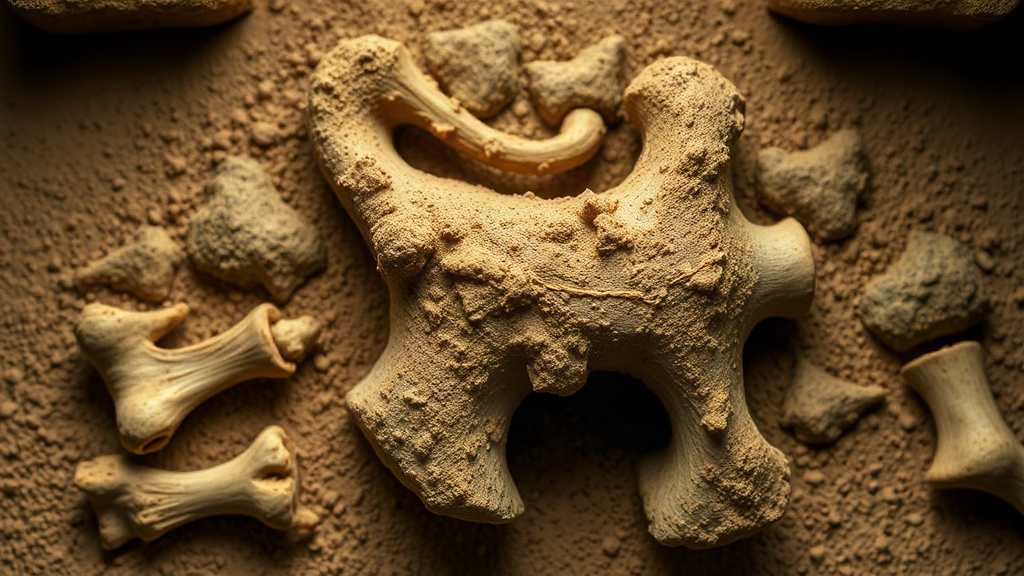
The archaeologist who spent a career staring at cattle teeth has died, and the Indus Valley just lost one of the few people who could tell you what its inhabitants actually ate for dinner.
Richard Meadow, who directed the Harappa Archaeological Research Project for decades, died in 2026. The notice on Harappa.com describes a scholar who spent his career in the unglamorous end of archaeology — not seals, not scripts, not the search for a lost script's Rosetta Stone, but bones. Animal bones, mostly broken, often burned, pulled by the sackful from the trenches at Harappa in Punjab, Pakistan.
That is not where most people expect the big discoveries to happen. Harappa and Mohenjo-daro have long attracted attention for their grid-planned streets, standardized weights, and an undeciphered script that has launched a hundred speculative decipherments. Statehood, administration, trade networks stretching to Mesopotamia — these are the questions that make headlines. Meadow's questions were smaller and, it turns out, harder to answer honestly: what animals did people keep, when did they kill them, and what does a cut mark on a rib actually prove.
Reading Teeth Like Tree Rings
Zooarchaeology — the study of animal remains from archaeological sites — sounds like a marginal specialty until you realize that bones survive far better than almost anything else in the Indus record, and that they record behavior in a way that a broken pot or a stamped seal cannot. A tooth's wear pattern can suggest an animal's age at death. A cut mark's angle can suggest whether an animal was slaughtered for meat or died of disease. A bone's isotopic signature can hint at what pasture it grazed.
Meadow's contribution, according to the Harappa.com tribute, was to bring this kind of granular, patient analysis to a site that had mostly been read through its monumental features — its walls, its street grids, its administrative apparatus. The tribute frames his work at Harappa as long-term and collaborative, spanning the excavation seasons that ran from the 1980s onward under the Harappa Archaeological Research Project, work that involved sustained attention to faunal remains alongside the site's better-known material culture.
This is the kind of work that does not produce a single dramatic headline. It produces, instead, a slow correction to how the whole civilization is imagined. Instead of a top-down administrative machine stamping seals and taxing grain, the picture that emerges from bone assemblages is closer to households managing herds, slaughtering animals seasonally, and making decisions about cattle that had as much to do with milk, traction, and dung as with meat.
Cattle, Domestication, and the Limits of the Evidence
Cattle occupy an outsized place in Indus archaeology, partly because zebu cattle (the humped Bos indicus) appear so often in seal iconography, and partly because bone counts at sites across the region tend to be dominated by cattle remains. Reconstructing when and how zebu cattle were domesticated in South Asia — as opposed to imported already-domesticated from elsewhere — has been one of the harder problems in the field, and it depends almost entirely on the kind of bone-by-bone, tooth-by-tooth work that Meadow specialized in.
That specificity matters because grand narratives about "the rise of the Indus state" tend to flatten this kind of variation. A single seal or a single burial gets treated as evidence for an entire social order. Faunal assemblages resist that kind of flattening. They force a reporter, or a scholar, to ask duller questions: how many individual animals does this bone count represent, what proportion were juvenile versus adult at death, does the age profile suggest dairying (where you'd expect more male calves culled young) or meat production (where age at slaughter tracks differently), and does that pattern hold across seasons or years.
Why the Bones Outlast the Headlines
None of this is the kind of finding that generates a viral "oldest domestication in the world" claim, and that is arguably the point. The seasonal-consumption and pastoral-management picture that emerges from decades of faunal analysis at Harappa is incremental. It gets revised as sample sizes grow, as recovery methods improve — sieving finer mesh catches smaller bones, changing what you think people were eating — and as new statistical approaches get applied to old bone counts.
That incrementalism is also why the work is durable. A seal reading can be overturned by a new inscription. A radiocarbon date can be recalibrated. But a well-documented bone assemblage, properly published with its stratigraphic context, stays useful for decades, because the next scholar can go back to the same collection and ask a different question of it.
The Harappa.com tribute to Meadow makes clear that this was his real legacy at Harappa: not a single reinterpretation of the Indus economy, but a body of carefully recorded, carefully dated faunal data that other zooarchaeologists will keep returning to. In a field prone to grand pronouncements about lost civilizations and singular founding moments, that is a quieter kind of achievement — the sort that shows up not in a headline but in a footnote, cited again and again, for as long as anyone keeps digging at Harappa.