The Bhitari Pillar of Skandagupta: What Imperial Epigraphy and Omitted Names Reveal About the Gupta Succession Wars
The monolithic sandstone pillar at Bhitari and later imperial genealogies reveal a bitter, mid-fifth-century civil war that fractured the Gupta dynasty's golden age from within.

Rohan Bhattacharya for SwavedaSeptember 29, 2026
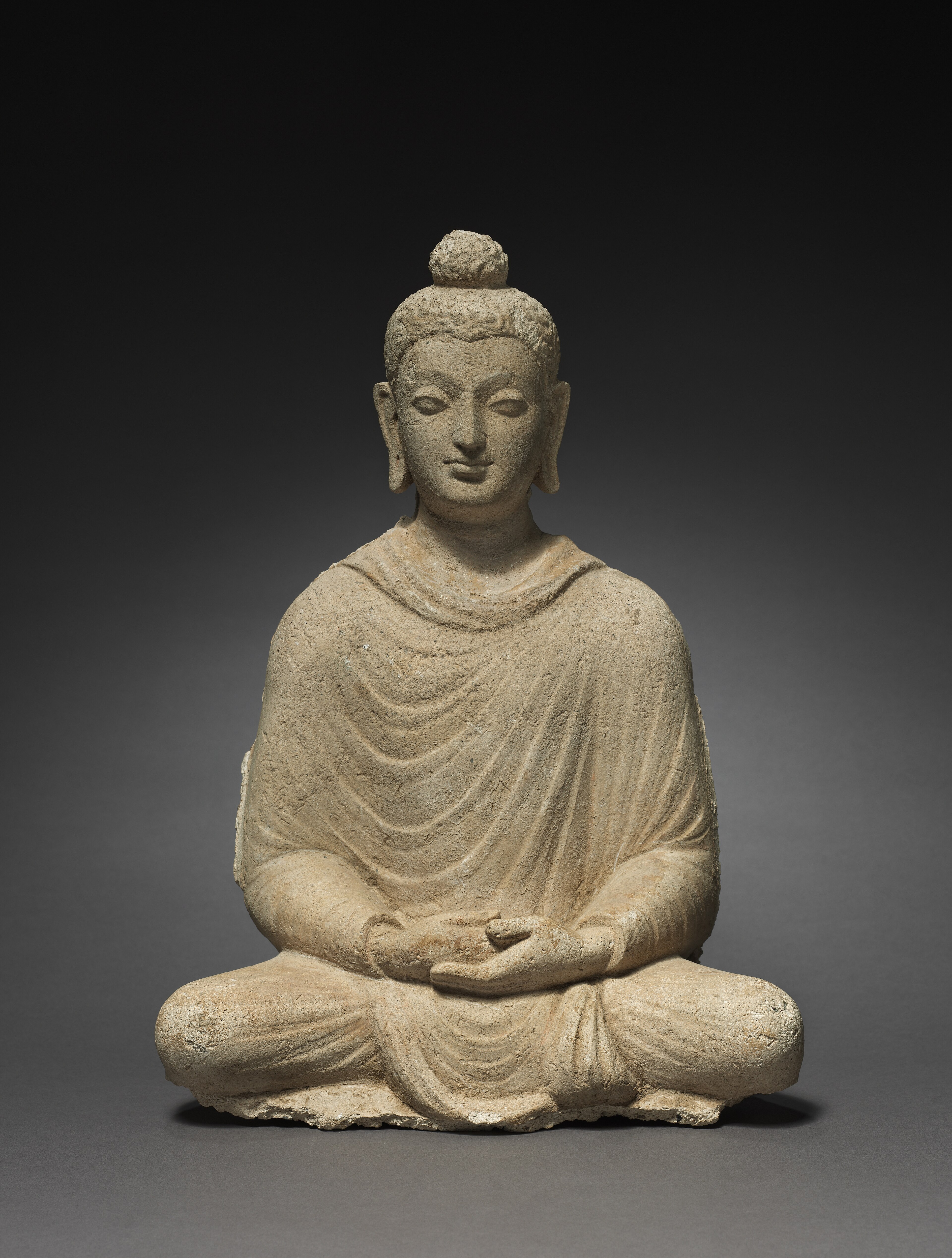
Popular narratives often present the Gupta golden age as a period of unbroken imperial stability. The standard dynastic outline traces a clean line of inheritance from Samudragupta to Chandragupta II, and onward through Kumaragupta I. However, a close examination of the physical monuments and later epigraphical records tells a far more turbulent story. Grounded in the material evidence of fifth-century monuments and clay sealings, the transition of power around 455 CE shows all the hallmarks of a bitter succession struggle that nearly brought the empire to an early collapse.
The primary witness to this political crisis is the Bhitari stone pillar. Located in the Ghazipur district of Uttar Pradesh, this fifteen-foot monolithic sandstone pillar features a nineteen-line inscription written in late Brahmi script and Sanskrit. Scholars analyzing the text have long noted its highly defensive, emotionally charged tone. Unlike the standard prashastis (royal panegyrics) of earlier monarchs, which boast of sweeping conquests and stable inheritances, the Bhitari inscription is an account of a desperate rescue mission.
The Anomaly of the Unnamed Mother
In the stratigraphy of imperial genealogy, what is omitted is often as significant as what is preserved. The Bhitari pillar inscription begins with a formal lineage of the Gupta dynasty. For each preceding generation, the text names both the reigning emperor and his mahadevi (chief queen). It meticulously lists Kumaradevi as the mother of Samudragupta, Dattadevi as the mother of Chandragupta II, and Dhruvadevi as the mother of Kumaragupta I.
Yet, when the inscription reaches the reigning monarch, Skandagupta, the naming convention abruptly fractures. While his father, Kumaragupta I, is named, the name of Skandagupta’s mother is entirely absent from the text.
This omission is a glaring anomaly in Gupta epigraphy. In a highly status-conscious imperial court, the failure to record the chief queen's name strongly implies that Skandagupta’s mother did not hold that rank. Scholars such as A.L. Basham historically argued that she may have been a junior queen or of lower status, meaning Skandagupta lacked the primary dynastic claim to the throne.
The text of the inscription attempts to compensate for this genealogical weakness through vivid literary comparisons. Verse six states that after restoring the "fallen fortunes" of his lineage, Skandagupta returned to report his victories to his weeping mother, "just as Krishna did to Devaki". This comparison to the mythological Devaki—who was imprisoned and humiliated before her son overthrew the tyrant Kamsa—strongly suggests that Skandagupta’s mother suffered severe hardship or political isolation during the transition of power.
Reconstructing the War of Succession
The events surrounding the death of Kumaragupta I in 455 CE indicate that Skandagupta did not experience a peaceful coronation. The Bhitari pillar notes that during the final years of Kumaragupta's reign, the empire's fortunes were "overthrown" by powerful adversaries, specifically the Pushyamitras. Skandagupta, acting as crown prince, was sent to the frontier to stabilize the situation. The inscription describes him spending a night sleeping "on the bare earth" as he fought to restore his family's shaky authority.
While Skandagupta was away fighting on the borders, Kumaragupta I died. The Gupta War of Succession (455-456) likely broke out immediately. The Junagadh rock inscription of Skandagupta in Gujarat supports this timeline of internal strife. The text states that after his father's death, Skandagupta had to humble his rivals "by his own prowess" before securing the earth bounded by the oceans.
The chief rival to the throne was almost certainly Purugupta, his half-brother. Unlike Skandagupta, Purugupta was the son of Kumaragupta I and his chief queen, Anantadevi. Purugupta held the legitimate dynastic claim, backed by the senior factions of the imperial court.
This internal conflict explains why Skandagupta is described on the Bhitari pillar as "the sole hero of the Gupta family," who was forced to place his left foot upon the footstool of a defeated king to assert his authority. He succeeded in seizing the throne through military force, but his victory came at a massive cost to dynastic unity.
Erasure from the Imperial Records
If Skandagupta won the physical war, his rivals eventually won the archival battle. In the decades following his death in 467 CE, the official genealogies of the Gupta dynasty underwent a systematic revision.
The most striking evidence of this post-mortem exclusion comes from late imperial artifacts, such as the Bhitari copper-silver seal of Kumaragupta III and the clay sealings discovered during excavations at Nalanda. These official records trace the lineage of the late fifth- and sixth-century Gupta kings.
In these genealogies, the line of succession bypasses Skandagupta entirely. The texts list Kumaragupta I, followed immediately by his son Purugupta, and then Purugupta's descendants, including Budhagupta and Narasimhagupta. Skandagupta’s name is completely excised.
This erasure is not merely an accident of preservation. Because the later rulers of the empire descended from Purugupta’s line, the official court genealogists chose to legitimize their own branch of the family. They ignored the reign of the military usurper, despite the fact that he had saved the empire from external threats like the Kidarites and Hunas.
Economic Aftershocks in the Numismatic Record
The material consequences of these political and military upheavals are clearly visible in contemporary coinage. The decline of the Gupta Empire is directly reflected in the metallurgic quality of the currency minted during and immediately after Skandagupta’s reign.
During the reigns of Samudragupta and Chandragupta II, the dynasty issued abundant gold coins of exceptionally high purity. However, analysis of Skandagupta’s gold coins reveals a significant drop in gold content. The urgent need to finance both a succession war and frontier defense forced the treasury to debase the coinage.
Furthermore, the geographical distribution of late Gupta coin hoards reveals a contracting economy. After the reign of Skandagupta, the presence of Gupta gold coins in Saurashtra and western Malwa virtually disappears, indicating a permanent loss of central administrative control over the wealthy western trade ports.
Rather than a golden era of peaceful continuity, the epigraphical and numismatic records present a picture of a dynasty under severe internal stress. The Bhitari pillar stands as a monument to a king who successfully fought off foreign invasions, yet remained a dynastic outsider whose name his own successors sought to erase from history.