The Barley of Karanpura: What Flotation Samples Reveal About Late Harappan Crop Choice in Rajasthan
Flotation samples from Karanpura, Rajasthan, reveal how Late Harappan farmers adapted to shifting monsoons by prioritizing drought-resistant barley over wheat, challenging theories of sudden agricultural collapse.

Rohan Bhattacharya for SwavedaSeptember 6, 2026
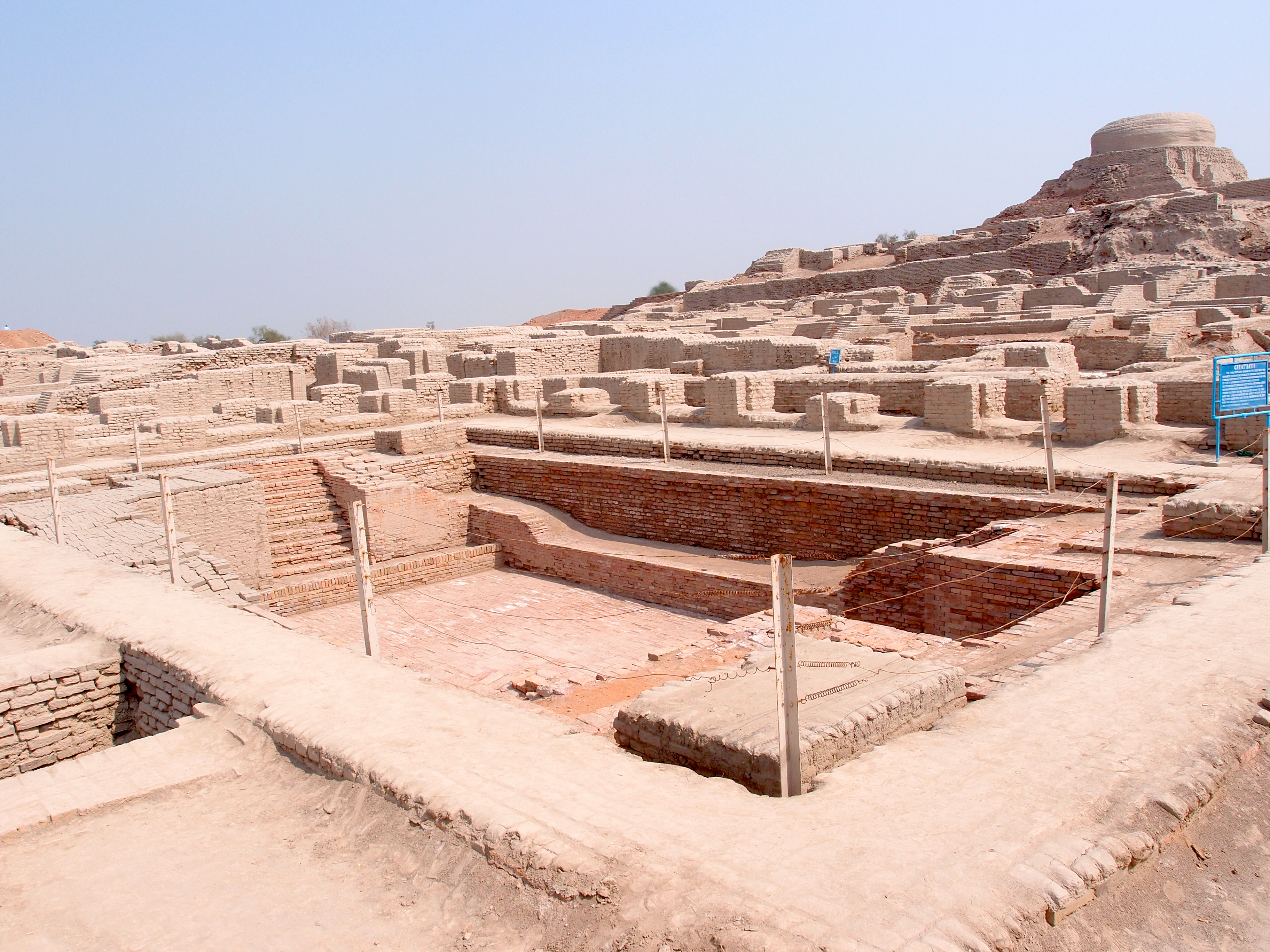
The transition from the Mature Harappan to the Late Harappan period has often been framed in dramatic terms. Popular narratives frequently describe abandoned cities, broken trade networks, and sudden societal collapse. However, the stratigraphy (the study of rock and soil layers) of smaller rural settlements tells a far more complex story of human resilience. At Karanpura, an Indus Valley site located in the Hanumangarh district of Rajasthan, the micro-botanical evidence retrieved from the soil reveals a deliberate, gradual shift in farming strategy rather than an abrupt agricultural failure.
Excavations conducted by the Archaeological Survey of India (ASI) have provided fresh material for archaeobotanists to reconstruct ancient land-use patterns. By analyzing macro-remains—specifically carbonized seeds recovered through flotation (a technique of using water to separate organic material from excavated soil)—researchers are piecing together how local farmers responded to a weakening monsoon. The emerging picture shows a calculated transition from wheat cultivation to a reliance on drought-resistant Hordeum vulgare (barley).
The Stratigraphy of Karanpura
Karanpura sits in the dry bed of the Ghaggar River, a region that was highly sensitive to environmental fluctuations during the third and second millennia BCE. The occupational deposit at the site spans from the Early Harappan to the Late Harappan periods.
In archaeological fieldwork, stratigraphic layers act as a timeline. At Karanpura, the lower Mature Harappan layers yield a diverse mix of agricultural output. Wheat (Triticum aestivum) and barley are found alongside pulses and winter crops. However, as we move upward into the transitional and Late Harappan layers, the ratio of these crops shifts.
The physical layers do not show a sudden burn horizon (a layer of charcoal indicating fire) or a layer of sterile windblown sand indicating abandonment. Instead, they show continuous occupation with subtle changes in pottery styles and, most importantly, a steady decline in the volume of wheat grains relative to barley. Barley grains, which are tougher and require less water than wheat, begin to dominate the flotation samples in the upper strata.
The Flotation Evidence
Archaeological reports, including those published in Puratattva (the journal of the Indian Archaeological Society) and Man and Environment (the journal of the Indian Society for Prehistoric and Quaternary Studies), have increasingly focused on systematic flotation to recover botanical data. Historically, older excavations in the region focused primarily on structures, beads, and painted pottery, often overlooking the microscopic residues of daily survival.
When flotation is applied systematically, the results are telling. In the dry, semi-arid conditions of western Rajasthan, wheat requires a reliable, sustained water supply, either through winter rains or intensive canal irrigation. Barley, by contrast, has a shorter growing season and can tolerate higher soil salinity and lower rainfall.
The flotation samples from the Late Harappan phases at Karanpura show a high concentration of six-row hulled barley. The presence of weed seeds commonly associated with dry-land farming further confirms that farmers were relying on rain-fed agriculture rather than active river irrigation. Tradition holds that the Harappans were helpless in the face of a drying climate, but the botanical evidence shows that local populations actively adapted their agricultural strategies to match the changing environment.
Beyond the Collapse Narrative
This localized crop choice challenges the older, sweeping theories of a uniform Indus collapse. Scholars debate the exact timing and severity of the dry spell that affected South Asia around 4,200 years ago, often referred to as the 4.2ka event. Some argue it caused a rapid regional abandonment, while others suggest a more gradual, fragmented relocation of populations.
The agricultural record at Karanpura supports the latter view. Rather than fleeing their fields, the inhabitants altered what they planted. This shift to barley-dominated agriculture represents a successful adaptation that allowed rural settlements to persist even as the major urban centers of the Indus Valley declined.
Furthermore, comparative studies of contemporary sites in Haryana and Punjab, often published in journals like Antiquity, show similar patterns of diversification. Farmers in the eastern domain of the Indus civilization increasingly adopted summer-cropping millet alongside winter-cropping barley, spreading their ecological risk across different seasons.
The Micro-Details of Survival
For field archaeologists, the most valuable discoveries are often the least glamorous. A single charcoal-rich hearth containing charred barley husks provides more direct data about human decision-making than a hoard of gold beads.
At Karanpura, the high frequency of charred barley grains in domestic hearth contexts suggests that barley was not merely a fallback crop or animal fodder, but a primary staple of the Late Harappan diet. The grains show signs of processing, such as parching, which was likely done to make the tough husks easier to remove.
By examining these dry, technical details of crop ratios and seed morphology, we gain a clearer understanding of the past. The farmers of Karanpura did not simply watch their civilization fade away. They adapted, crop by crop and season by season, leaving behind a resilient agricultural legacy written in the soil.
Sources and Further Reading: