Substratum Vocabulary in Proto-Dravidian Flora: How Botanical Linguistics Pinpoints Pre-Dravidian Forager Contact
Linguistic analysis of peninsular plant names isolates a pre-Dravidian substrate, illuminating early interactions between hunter-gatherers and expanding Neolithic pastoralists.

Devika Menon for SwavedaNovember 25, 2026
Listen to this article · 4 min · Read by an AI voice
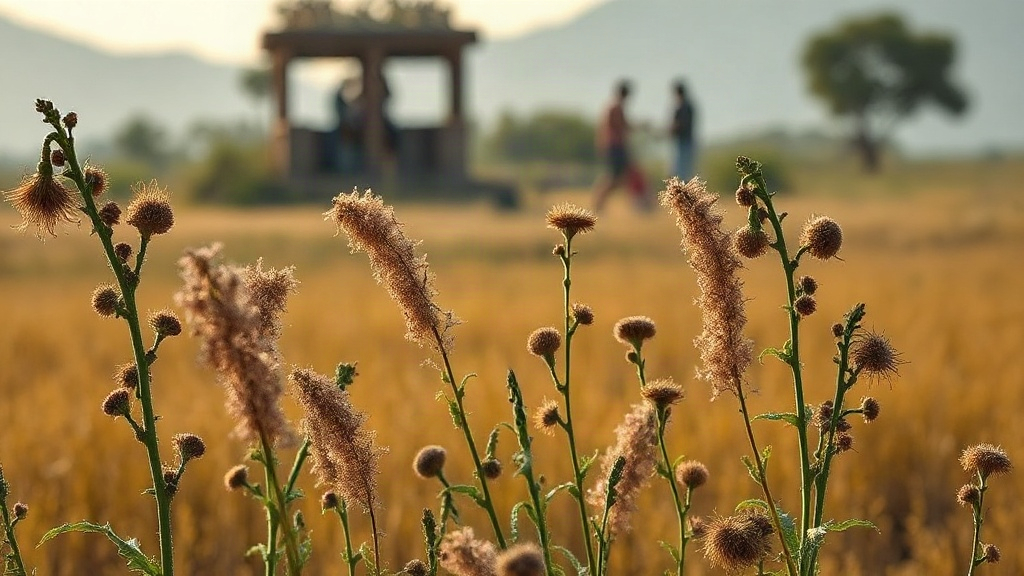
When agropastoral communities expanded across the southern peninsular plateaus during the Neolithic transition, they brought domesticated crops, livestock, and a distinct vocabulary. Evidence shows they did not settle an empty landscape. Comparative Dravidian linguistics reveals that as Proto-Dravidian speech spread across the peninsula, it absorbed a distinct stratum of plant names from indigenous hunter-gatherers. This botanical substrate isolates the linguistic footprint of pre-Dravidian foraging groups, illuminating early ecological contact in South Asia.
Linguists establish genetic relationships between languages by tracking systematic sound correspondences across core vocabulary. In A Dravidian Etymological Dictionary (DEDR), T. Burrow and M. B. Emeneau systematically mapped thousands of cognate sets (Burrow & Emeneau 1984). While core terms for body parts, basic actions, and kin relationships reconstruct smoothly to Proto-Dravidian roots, a specific subset of peninsular flora exhibits anomalous structural patterns. These plant names lack cognates in sibling branches, resist regular phonological derivation, and display irregular derivative suffixes.
Linguist Franklin C. Southworth (Southworth 2005) demonstrated that agricultural and botanical terms provide critical temporal anchors for linguistic reconstruction. In analyzing the Proto-Dravidian lexicon, scholars distinguish between imported crop terms, native wild flora, and local unanalyzable plant names. Reconstructed agricultural terms reflect crops that archaeobotanists confirm for the Southern Neolithic complex—such as small millets (Brachiaria ramosa) and horsegram (Macrotyloma uniflorum).
However, non-cultivated species native to the dry deciduous forests of the Western Ghats and the Deccan Plateau often bear names that cannot be broken down into standard Proto-Dravidian roots. ⚖ Scholarly debate surrounds whether these non-Dravidian lexemes represent an ancient isolate language family, an early lost branch of Austroasiatic related to Munda, or multiple hyper-local foraging dialects that vanished as agropastoralism spread.
Linguist Michael Witzel (Witzel 2009) notes that substrate words in South Asia typically exhibit specific structural signatures, including unanalyzable multi-syllabic stems and non-standard initial consonants. When pastoral communities entered new micro-environments, they borrowed established names for hyper-local tubers, wild fruits, and medicinal barks from resident foraging populations who possessed deep ecological knowledge of peninsular ecosystems.
This linguistic borrowing mirrors the archaeobotanical record of the South Indian Neolithic period (dating roughly to the third and second millennia BCE). Archaeobotanical research led by Dorian Q. Fuller (Fuller et al. 2004) demonstrates that early peninsular agriculture relied on a mix of locally domesticated species and wild gathered foods, such as fruits of the Ziziphus genus. The persistent presence of wild forage items alongside cultivated grains at Neolithic sites indicates long-term economic interaction between early farmers and resident foragers.
The substrate vocabulary isolated in South Dravidian plant names serves as a primary marker for this cultural exchange. Rather than replacing local plant lore, incoming pastoralists adopted Indigenous names for endemic flora that had no equivalent in their ancestral lexicon. This pattern of lexical retention indicates that pre-Dravidian foraging communities were not instantly displaced, but lived alongside expanding agropastoral groups, contributing their specialized botanical knowledge—and their words—to the emerging peninsular linguistic landscape.