Odisha's Sculptural Layers: 7th to 14th Century Artistry Unearthed
Exploring Odisha's rich sculptural heritage from the 7th to 14th centuries CE, this article examines stylistic evolution and iconographic shifts at the Odisha State Museum.
Rohan Bhattacharya for SwavedaJuly 9, 2026
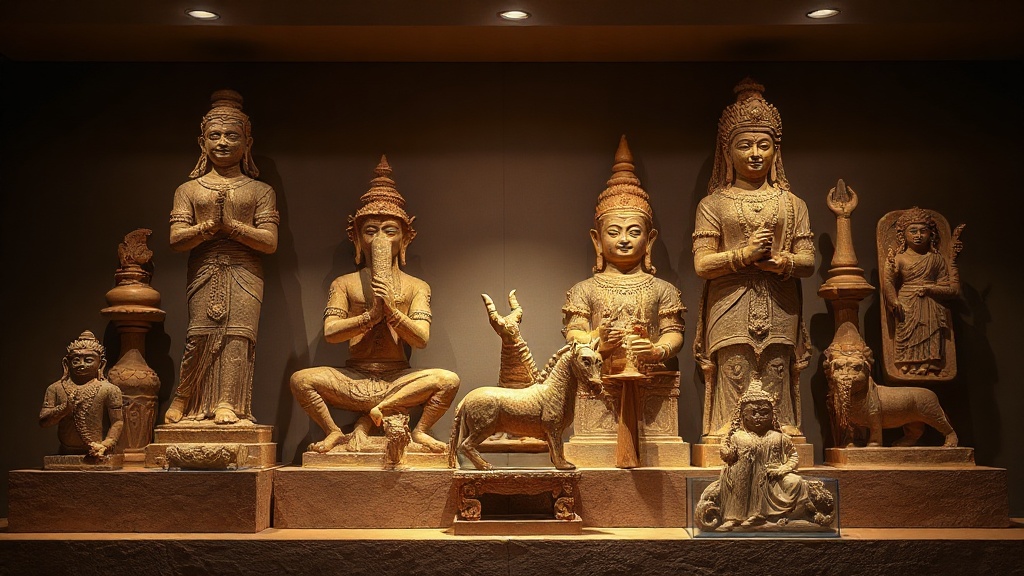
The sheer volume of ancient sculpture housed in Indian museums can sometimes obscure the finer points of stylistic development. A closer stratigraphic approach, however, reveals how subtle shifts in carving techniques and iconographic representation offer a clearer picture of cultural and religious change over time. Within the collections of the Odisha State Museum, a selection of works dating from the 7th to the 14th centuries CE provides a rich field for such examination, allowing us to trace the evolution of artistic expression in a region that was a significant center of religious and cultural patronage.
This period in Odisha, often referred to as the "classical" or "medieval" phase, witnessed the rise and consolidation of several powerful dynasties, including the Sailodbhavas, the Bhaumakaras, the Somavamsis, and the Eastern Gangas. Their patronage fueled the construction of numerous temples, many of which were adorned with elaborate stone sculptures. These works are not merely decorative; they serve as historical documents, reflecting evolving theological concepts, social practices, and artistic traditions.
The 7th century, for instance, marks a transition from earlier styles influenced by Gupta art. Sculptures from this period, often found at sites like Bhubaneswar, begin to exhibit a distinct Odishan flavor. Examining pieces from this era, one can observe a certain austerity and a focus on linear definition. Figures might appear somewhat more rigid, with a developing understanding of bodily proportions and drapery. The religious context is often Shaivite or early Tantric, with depictions of deities like Shiva, Parvati, and Ganesha appearing with specific iconographic attributes that would be further elaborated in later centuries. An early sandstone panel depicting Surya (the Sun God) from the 7th or 8th century, for instance, showcases a developing iconography with clear demarcations of the divine figure and attendants. The carving, while skilled, may lack the fluidity seen in later periods.
Moving into the 8th and 9th centuries, under the Bhaumakara rulers, Odishan art enters a more mature phase. Sculptures begin to show increased sophistication in modeling and a greater dynamism in composition. There is a noticeable refinement in the rendering of facial features, with softer contours and more expressive eyes. The drapery often becomes more elaborate, with delicate folds that suggest the flow of fabric. Iconographically, this period sees the further development of Puranic deities and the growing influence of Tantric Buddhism, with sculptures of Buddhas and Bodhisattvas appearing alongside Hindu deities. A bronze Buddha from this period, if available for comparison, might show a more refined casting technique and a serene, contemplative expression distinct from earlier styles. The stone sculptures of this era, such as those found at Ratnagiri, demonstrate an increasing mastery of form and ornamentation.
The Somavamsi period, spanning the late 9th to the early 12th centuries, is often considered a high point for Odishan art. Sculptures from this era exhibit exceptional grace and naturalism. The carving becomes more intricate, with delicate details in jewelry, hairstyles, and architectural elements. The figures are more rounded and possess a sense of movement. The Kalingan style, as it is sometimes referred to, fully blossoms here. Iconography becomes highly standardized, and there is a particular emphasis on the divine female form, with goddesses like Durga and Mahishamardini depicted with formidable power and aesthetic beauty. A typical Durga Mahishasuramardini from this period might showcase multiple arms, a powerful stance, and a dynamic battle scene rendered with remarkable clarity and precision. The quality of stone carving, often employing finer-grained sandstone or khondalite, allows for intricate details.
The Eastern Ganga period, from the early 12th century to the 14th century and beyond, continues the artistic traditions established by the Somavamsis, with further refinements and sometimes a greater emphasis on grandeur and scale, particularly associated with the Sun Temple at Konark, though many earlier Ganga-era sculptures also exist in museum collections. Sculptures from this period maintain a high level of technical skill. There may be a tendency towards more elaborate decorative motifs and a greater emphasis on architectural integration. Iconography continues to evolve, with increased depictions of deities in their various manifestations and subsidiary deities. The depiction of celestial beings, dancers, and musicians becomes more prominent, adding a lively dimension to temple ensembles. The refined carving in later Ganga sculptures often features a lustrous finish, indicative of the artisans' advanced techniques.
Within the Odisha State Museum, encountering these sculptures sequentially allows for an immediate appreciation of this temporal layering. A sandstone stele from the 7th century might sit near an intricately carved chlorite stone panel from the 12th century. The difference in texture, the precision of the chisel marks, and the very 'feel' of the figures betray the passage of centuries and the evolution of both the materials and the hands that worked them. It is in these details—the subtle curve of a shoulder, the articulation of a hand, the way a garment falls—that the history of Odishan art is most vividly preserved. These are not static artifacts, but rather markers in a continuous stream of cultural and artistic production, each layer informing the next.
The stylistic evolution is not a uniform progression; regional variations and the survival of older traditions also play a role. However, the broad trajectory from a more formal, linear style to one characterized by greater naturalism, fluidity, and decorative richness is evident. The iconography, too, offers a window into changing religious beliefs and practices, reflecting periods of consolidation for certain deities and the introduction or adaptation of others. By carefully observing these sculpted artifacts, we can reconstruct a nuanced understanding of medieval Odisha's vibrant artistic and spiritual landscape, moving beyond broad classifications to appreciate the specific contributions of each era.