Harappan Kitchens: How Trans-Regional Trade Shaped Early Urban Diets
Archaeobotanical findings reveal how the Indus Valley Civilization transformed its diet through the cultivation of non-native crops, signaling complex trade networks.

Kavya Sharma for SwavedaJuly 21, 2026
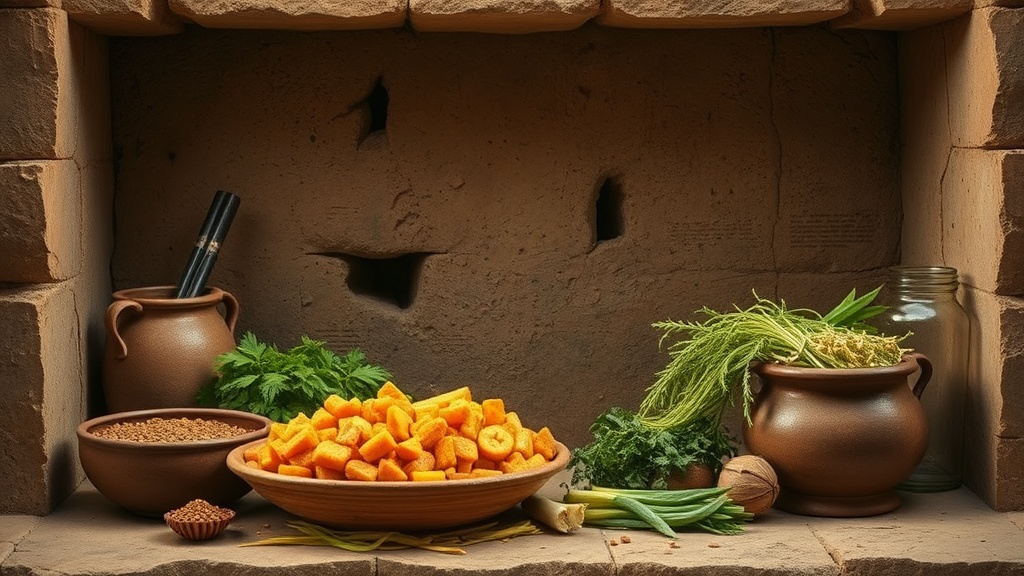
The Harappan kitchen was not a closed system. While the Indus Valley Civilization—which flourished in modern-day Pakistan and northwest India roughly between 2600 and 1900 BCE—is often characterized by its rigid city planning and standardized weights, its culinary foundation was surprisingly fluid. Evidence shows that the diet of these early urbanites relied on a sophisticated integration of local and exotic crops, a shift made possible by extensive trade networks.
The Archaeobotanical Shift
Archaeobotany, the study of plant remains from archaeological sites, has moved beyond simple identification. Researchers now analyze carbonized seeds and pollen to reconstruct ancient agricultural practices. According to a study published in the journal Nature, the transition toward a "multi-cropping" strategy allowed Harappan farmers to harvest in both summer and winter. This change was essential for supporting the dense populations of cities like Mohenjo-Daro and Harappa.
The introduction of summer crops—such as mung bean (Vigna radiata), horse gram (Macrotyloma uniflorum), and millet—represented a departure from the traditional winter-based cereal agriculture of the region. Scholars debate whether these crops arrived through gradual migration or intentional human-led exchange. However, the presence of these species in Indus Valley layers suggests a deliberate effort to diversify the food supply.
Seeds of Exchange
Sesame (Sesamum indicum) serves as one of the most compelling pieces of evidence for ancient trade. While wild ancestors of sesame are found in the region, the domesticated variety shows genetic markers linked to broader movements across the Arabian Sea. Researchers writing in the Journal of Archaeological Science have noted that sesame became a primary oil-seed crop in the Indus region by the Mature Harappan phase. Its value likely transcended mere caloric intake; oils were critical for lamps, cosmetics, and tradeable surplus.
The movement of these seeds suggests that Harappan merchants were not merely passive participants in a local economy. They were active brokers in a network that stretched toward the Iranian plateau and the Persian Gulf. By incorporating these non-native species, the Harappan people adapted their diet to mitigate the risks of crop failure. If a winter wheat harvest fell short, the summer mung bean crop—which is generally more drought-tolerant—provided a necessary buffer.
Beyond the Grain
The structure of these urban diets also reveals how the Harappans organized their labor. Cultivating summer crops requires a different rhythm of irrigation and weeding than winter wheat or barley. Tradition holds that the Indus river system provided a predictable flood cycle, but evidence shows that farmers also utilized small-scale canal irrigation to sustain these imported crops during the intense heat of the Indian summer.
This labor-intensive approach points to a high degree of agricultural coordination. To grow mung beans and sesame alongside wheat and barley, communities had to manage water access and field rotation with extreme precision.
Why Provenance Matters
When we look at a charred sesame seed pulled from an excavation site, we are seeing more than just an ingredient. We are seeing a snapshot of a supply chain. The integration of these crops reflects a civilization that was outward-looking.
Archaeologists often categorize the Indus Valley by its lack of large-scale, royal monuments compared to contemporary Egypt or Mesopotamia. Yet, the archaeobotanical data suggests a different kind of power: the power of the market. The ability to successfully cultivate and standardize crops like mung bean suggests that the Harappan economy was built on the reliable, mundane, and essential movement of seeds.
As we refine our understanding of these ancient agricultural patterns, it becomes clear that the "great cities" of the Indus were sustained by a silent, green revolution. These non-native plants were the fuel for an urban society that prioritized diversity over monoculture, a strategy that allowed them to thrive for centuries in a challenging, semi-arid environment. The Harappan diet was not just a collection of ingredients; it was a deliberate, managed response to the interconnected world they inhabited.