Brahmagiri's Radiocarbon Dates: A New Timeline for Mauryan Influence in South India?
New C-14 dates from Brahmagiri challenge established timelines for Ashoka's reach, prompting a re-evaluation of Mauryan expansion in South India based on updated ASI findings.

Rohan Bhattacharya for SwavedaMay 30, 2026
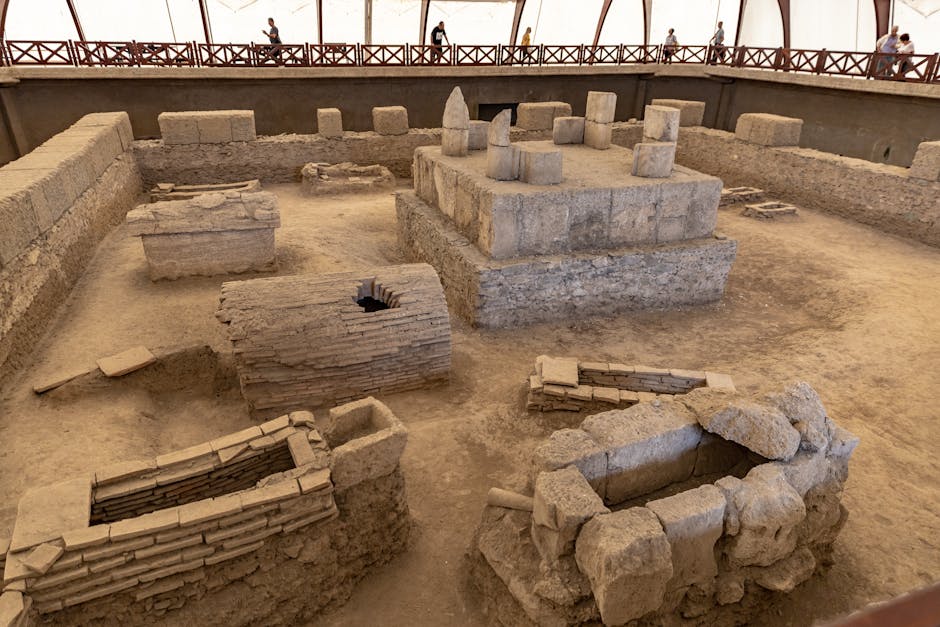
The ochre dust of Brahmagiri, a site frequently cited as a touchstone for understanding the Mauryan Emperor Ashoka's dominion, may hold a deeper story than previously assumed. Recent radiocarbon dating of key stratigraphic layers, detailed in updated reports from the Archaeological Survey of India (ASI), presents a revised timeline that could significantly alter our perception of the Mauryan Empire's direct influence in the southern reaches of the subcontinent. This new evidence compels a critical re-examination of traditional chronologies, particularly concerning the spread of Ashoka's edicts and administrative reach.
For decades, Brahmagiri, located in the Chitradurga district of Karnataka, has been central to discussions about Ashoka's empire. Excavations, notably those by Mortimer Wheeler in the 1940s and later by the ASI, unearthed a wealth of material, including pottery, coinage, and importantly, inscriptions attributed to Ashoka. The site’s identification as the location of one of Ashoka's minor rock edicts, specifically the Maski-Brahmagiri version, has cemented its status as a nexus of Mauryan presence in the south. These edicts, written in Prakrit and inscribed in Brahmi script, were historically interpreted as direct evidence of Ashoka's administration extending far beyond the Gangetic heartland.
The conventional dating for these edicts and the associated Mauryan occupation at Brahmagiri often aligns with the broader Mauryan period, roughly spanning from the 4th to the 2nd century BCE. This timeline has underpinned numerous scholarly constructions of Mauryan expansionist policies and the diffusion of Indic religious and administrative practices. The stratigraphy at Brahmagiri, where layers of occupation are found stacked one atop another like geological strata, has been crucial for establishing this chronological framework. Earlier archaeological interpretations relied on ceramic typologies, coin finds, and the context of the inscriptions to anchor their dating.
However, the meticulous process of radiocarbon dating, especially when applied to well-defined stratigraphic contexts, offers a more direct method for determining age. Carbon-14 (C-14) dating, a technique that measures the decay of the radioactive isotope carbon-14 in organic materials, can provide absolute dates. When applied to charcoal, bone, or other organic residues found within distinct archaeological layers, it allows for a more precise calibration of a site's timeline.
The recent ASI findings at Brahmagiri, which involve a re-analysis of excavated materials and a re-dating of specific contexts, appear to push back the earliest securely dated phases of occupation at the site. While specific publication details are still being assimilated into broader academic discourse, preliminary indications from ASI reports suggest that some of the layers associated with Mauryan-period artifacts, including those found in close proximity to the Ashokan inscriptions, yield C-14 dates that fall later than previously assumed.
This apparent discrepancy is not merely an academic quibble over a few decades. It has profound implications for understanding the nature and extent of Mauryan influence in South India. If the earliest securely dated occupation layers at Brahmagiri, including those potentially linked to the period of Ashoka's inscriptions, are chronologically later than traditionally accepted, it raises questions about the direct administrative control versus cultural or religious influence.
One of the critical aspects of this revised dating revolves around the interpretation of stratigraphy. Archaeologists like Wheeler were pioneers in applying systematic stratigraphical excavation to Indian sites. Stratigraphy is the study of rock layers and sediment, and in archaeology, it involves understanding how different layers of occupation deposit over time, with lower layers generally being older than those above. The principle of superposition is fundamental: in an undisturbed sequence, the oldest deposits are at the bottom.
The challenge at sites like Brahmagiri is often disentangling cultural phases. Was the presence of an Ashokan edict a marker of direct imperial administration, or could it represent the influence of a disseminated ideology or the presence of itinerant monks and officials operating in a region not under direct imperial control? New C-14 dates that suggest a later primary occupation phase could mean that the inscriptions, while historically significant, might not represent the absolute earliest Mauryan engagement with the region.
The implications extend to theories of Mauryan expansion. If the Mauryan Empire's direct administrative reach into South India was perhaps less extensive or established later than previously believed, it could necessitate a revision of how we understand the integration of southern polities into the broader Mauryan world. This does not diminish the importance of the Mauryan Empire or Ashoka's efforts; rather, it refines our understanding of the pace and mechanics of imperial expansion in a geographically diverse subcontinent.
This re-evaluation is in keeping with the careful, evidence-based approach to Indian history championed by publications like Man and Environment and the rigorous archaeological reporting expected from the ASI. It moves away from broad, sweeping claims of empire and towards a more nuanced, stratigraphically informed picture. The dating disputes at Brahmagiri, like those surrounding other key Mauryan sites, highlight the ongoing process of archaeological interpretation, where new techniques and re-analysis of existing data can significantly shift our understanding.
For scholars and enthusiasts alike, the Brahmagiri case serves as a potent reminder that the layers of the past are not always neatly defined. The discovery and re-dating of materials are akin to finding a crucial artifact or a hidden hearth in an excavation pit—small details that, when properly understood within their stratigraphic context, can illuminate entire periods. The precise impact of these new C-14 dates from Brahmagiri on the established narrative of the Mauryan Empire will unfold as more detailed analyses are published and debated within the archaeological community. However, the initial indications are clear: the story of Ashoka's reach in South India may be more complex, and perhaps later, than we have long supposed.