Beyond the Battlefield: Daily Life in a Maratha Camp
Explore the mundane realities of a Maratha military camp, moving beyond grand narratives to examine the routines, logistics, and social interactions that shaped everyday life.

Kavya Sharma for SwavedaJune 12, 2026
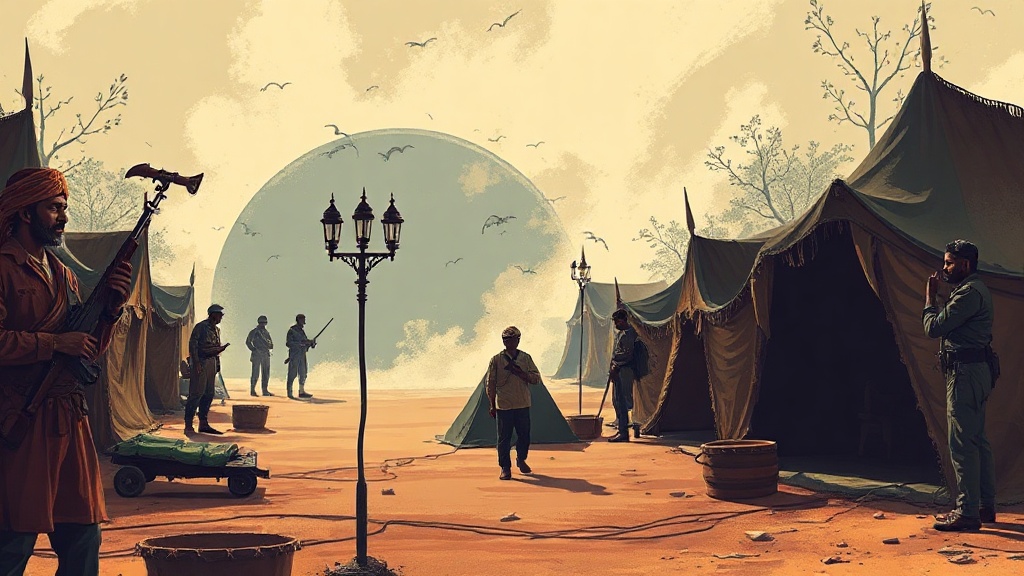
The clatter of metal, the murmur of voices, the smell of woodsmoke and cooking – these were the constant sounds and scents of a Maratha military camp. While history books often focus on Shivaji Maharaj’s strategic brilliance or the clash of armies, the lived experience of soldiers and their families in these sprawling encampments reveals a different story. It’s a story of ordinary Tuesdays, of sustenance, of community, and of the quiet rhythms that kept the Maratha empire moving, even in the shadow of conflict.
These were not mere temporary staging grounds; Maratha camps were often vibrant, self-contained communities that could persist for months. They housed not only soldiers but also their families, artisans, merchants, and support staff, creating a microcosm of society. Imagine the logistics involved in feeding thousands of people daily. Grain was the staple, often transported from conquered territories or through complex supply networks. Accounts suggest the Marathas had a well-organized commissariat system. Supplies would be collected, stored, and distributed, with provisions for both officers and common soldiers, though the quality and quantity likely varied.
The food itself would have been hearty and practical. Rice, jowar (sorghum), and bajra (pearl millet) formed the base of many meals, often cooked into a thick porridge or chapati. Lentils, a crucial source of protein, were also common. Vegetables would have been seasonal and locally sourced, supplemented by dried goods. The ubiquity of cooking fires would have painted the camp with smoke each morning and evening. Imagine women grinding grain, men tending to the fires, and the shared effort required to prepare meals for large groups. This was sustenance as a collective endeavor.
Beyond food, shelter was a primary concern. Tents of varying sizes and materials, from simple canvas to more elaborate cloth structures, would have dotted the landscape. These were not just for soldiers; officers and their families enjoyed more spacious accommodations. The arrangement of these tents likely followed a hierarchical structure, with the commander’s quarters at a central, prominent position. This organization was not just about status; it was crucial for command and control, ensuring swift communication and efficient deployment.
The daily routines of camp life were dictated by military necessity and basic human needs. Mornings would begin early, with soldiers preparing for drills, patrols, or their assigned duties. This could involve anything from weapon maintenance to guard duty. Water would be a constant concern, requiring a reliable source and the manpower to transport it to various parts of the camp. Sanitation, though perhaps not adhering to modern standards, would have been a practical consideration to prevent the spread of disease, a constant threat in any large gathering of people.
Social interaction was also a vital component of camp life. Soldiers formed bonds through shared hardship and camaraderie. Evenings offered a chance to relax, share stories, and engage in informal recreation. Music, folk tales, and simple games would have provided much-needed respite from the rigmarole of military existence. While the primary purpose of the camp was martial, the human element—the need for connection and entertainment—remained strong.
The presence of families added another layer to camp life. Wives and children often accompanied soldiers, creating a sense of continuity and home, however temporary. Women played crucial roles, managing households, cooking, and contributing to the camp’s economy through various crafts and trades. This allowed soldiers to focus on their military responsibilities, knowing their families were cared for. It was a pragmatic approach to sustaining a long-term military presence.
The movement of these camps was a significant logistical undertaking. Packing up tents, provisions, and all the accoutrements of camp life was a complex operation. The Marathas were known for their mobility, and their ability to establish and dismantle camps efficiently was a strategic advantage. This constant motion meant that camp life was a dynamic experience, always adapting to new locations and circumstances.
Looking at the mundane details of Maratha camps—the food, the shelter, the daily routines, the social fabric—provides a richer understanding of the empire's strength. It wasn’t solely built on battlefield victories, but on the enduring resilience and adaptability of the people who lived and served within its expanding reach, day in and day out. The ordinary lives within these camps were as critical to the Maratha legacy as any grand military campaign.