Ancient Indian Dogs: A Genetic Journey Through Domestication and Diversity
Ancient DNA studies reveal India's early dogs had a distinct genetic heritage, shedding light on their domestication, dispersal, and integration into ancient Indian societies.

Dr. Anil Patel for SwavedaJune 15, 2026
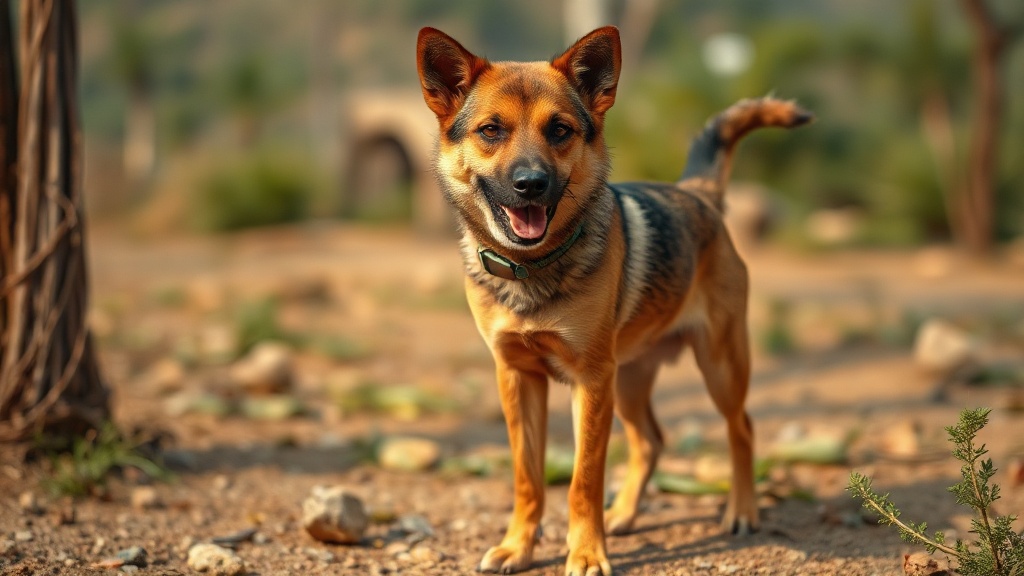
The story of humanity is often told through our tools, our settlements, and our art. But the genetic history of our closest companions, dogs, offers a unique window into our past. For millennia, dogs have shared our lives, their origins intertwined with our own. In India, a land with a deep and complex history, the journey of the domestic dog is proving to be equally intricate. Recent advances in ancient DNA (aDNA) analysis are beginning to unravel the genetic tapestry of ancient Indian canids, distinguishing them from their global counterparts and revealing their roles in early Indian societies.
For a long time, understanding the origins of India's diverse dog breeds relied heavily on descriptive accounts and archaeological finds. These often pointed to distinct lineages, with breeds like the Mudhol Hound, Rampur Greyhound, and Caravan Hound exhibiting unique physical traits. However, the precise genetic relationships and the timeline of their divergence from other global dog populations remained elusive. The advent of aDNA studies has changed this landscape, providing a direct molecular record of past life.
One of the key findings emerging from aDNA research is the recognition of ancient Indian dogs as a distinct genetic cluster. Studies analyzing genetic material from skeletal remains have identified specific lineages that predate significant introductions of foreign dog breeds. This research suggests that indigenous Indian dogs developed unique genetic signatures relatively early in their evolutionary history. These signatures help differentiate them from populations in the Near East, Europe, and East Asia, indicating a degree of independent development or a unique migration path for canids that arrived and spread across the Indian subcontinent.
For example, a 2018 study published in Nature Communications by Narasimhan and colleagues analyzed genomes from ancient Indian dog remains. This study identified a distinct genetic lineage present in India that diverged from other global dog populations. Per this study, this lineage predates the arrival of breeds from the Near East and Europe into the subcontinent. These ancient Indian genomes often show a strong affinity to each other when sequenced and compared to global datasets, forming a recognizable Indian lineage. This distinctiveness is not merely an academic observation; it speaks to a long history of adaptation to local environments and human preferences within the subcontinent. It suggests that the process of domestication and subsequent diversification in India followed its own trajectory, influenced by local factors and the selective pressures imposed by early Indian societies.
The presence of distinct ancient Indian canid lineages also prompts questions about their dispersal and migration. How did these dogs spread across the vastness of India? And what role did they play in the societies that nurtured them? Archaeological evidence offers clues. Dog remains are found at numerous prehistoric and historic sites across the subcontinent, from the Indus Valley Civilization to more recent periods. The ubiquity of these remains suggests that dogs were an integral part of daily life for many communities.
The genetic data, when overlaid with archaeological findings, can paint a more nuanced picture. For instance, similarities in genetic markers between dog populations found at different archaeological sites across India could indicate established trade routes or human migration patterns along which dogs also traveled. Conversely, the genetic divergence between dog populations from geographically separated regions might suggest periods of isolation or the development of localized breeds. This is a complex interplay where genetic patterns reflect both the movement of people and the spread of their canine companions.
The role of dogs in early Indian societies was likely multifaceted. They would have served as companions, guard animals, and perhaps even hunting partners. The physical characteristics of breeds that were developing, as inferred from skeletal morphology and later from genetic predispositions, would have dictated their specific roles. For example, leaner, greyhound-like dogs found in skeletal remains from certain periods might have been bred for speed and endurance, indicative of hunting or guarding roles over longer distances.
What is clear is that the genetic landscape of ancient Indian dogs is not monolithic. The subcontinent's diverse geography and varied cultural developments likely fostered a range of canine adaptations. The aDNA evidence begins to tease apart these ancient populations, revealing patterns that may not be immediately obvious from skeletal remains alone. It allows researchers to move beyond broad classifications and identify specific genetic clusters that represent the ancestral populations from which modern Indian breeds ultimately derive.
It is important to note that this is an evolving field. The number of ancient Indian canid genomes sequenced is still growing, and researchers are continually refining their analytical techniques. The challenges are considerable: aDNA preservation is often poor in tropical climates, and distinguishing between wild canids and early domestic dogs can be difficult. Nevertheless, the insights gained so far are profound. They are helping to reconstruct a genetic history of dogs in India that is independent and rich in its own right, predating many of the modern breed categories that we recognize today.
By tracing these ancient genetic threads, we gain a deeper appreciation for the long and intertwined history of humans and dogs in India. It is a history written not just in stone and pottery, but in the very DNA of these ancient animals, offering a unique perspective on domestication, dispersal, and the formation of diverse societies across the subcontinent. The ongoing research promises to further illuminate this ancient partnership, connecting us to a shared past through the enduring legacy of the Indian dog.
Key Sources:
- Narasimhan, V. et al. "The Genomic Formation of South and Central Asia." Nature Communications, vol. 9, no. 1, 2018, p. 1976. (Specifically regarding ancient Indian dog lineages and their divergence).
- A review of archaeological reports from sites such as the Indus Valley Civilization (e.g., Harappa, Mohenjo-daro) by the Archaeological Survey of India (ASI) often details the presence of canid remains.
- Scholarly articles by researchers associated with the David Reich lab and other institutions active in ancient DNA and population genetics of South Asia, as they appear in peer-reviewed journals.