Ancient DNA Unravels South Asian Population History
New ancient DNA studies illuminate South Asian population history, revealing complex migration and admixture. Findings integrate genetic data with traditional evidence to refine our understanding of the region's past.

Dr. Anil Patel for SwavedaMay 30, 2026
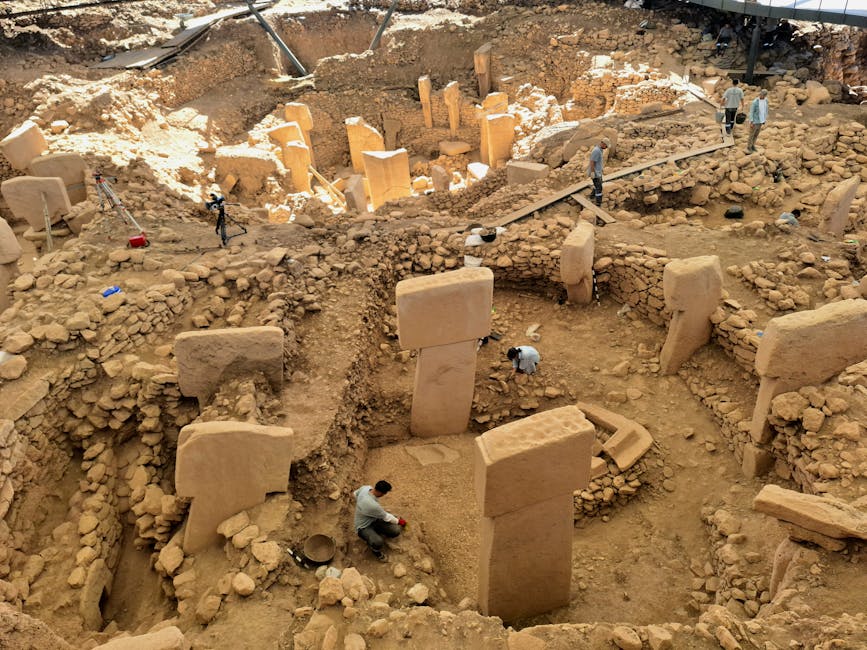
Ancient DNA analysis is increasingly offering a powerful lens through which to examine the complex tapestry of South Asian population history. Recent publications, such as those in the journal Cell, have employed sophisticated genetic techniques to reconstruct the movements and interactions of past peoples. These studies move beyond traditional archaeological and textual evidence, providing a layer of genetic data that helps refine our understanding of migration, admixture, and the formation of present-day populations.
The application of ancient DNA (aDNA) to South Asian history is a relatively recent endeavor, but it has rapidly yielded significant insights. The basic principle involves extracting and sequencing DNA from skeletal remains that are hundreds or thousands of years old. Unlike the DNA we inherit today, which is a mix of many ancestral contributions, ancient DNA can sometimes represent a more direct snapshot of individuals from a specific time and place. By comparing these ancient genetic profiles with each other and with modern populations, researchers can identify patterns of relatedness, trace ancestral lineages, and infer demographic events like migrations.
One of the key challenges in aDNA research, particularly in regions with warm climates like much of South Asia, is the degradation of genetic material over time. However, advances in laboratory techniques, such as targeted enrichment and improved sequencing technologies, have made it possible to recover usable data even from challenging samples. Publications by researchers like Vagheesh Narasimhan and the Reich lab, and more recently by Vasant Shinde’s team, showcase these advancements, detailing methodologies that allow for the recovery of valuable genetic information from sites across the subcontinent.
The interpretation of aDNA data relies on understanding fundamental genetic concepts. Researchers often analyze specific genetic markers, such as single nucleotide polymorphisms (SNPs), which are variations in the DNA sequence that occur at a specific position. By looking at the frequency and distribution of these SNPs across different ancient individuals and modern populations, scientists can infer relationships and population movements. For instance, if ancient individuals from one region share a high proportion of genetic markers with a modern population in another, it suggests a historical migration or interaction between those groups.
The concept of "admixture" is central to many of these studies. Admixture refers to the process where two or more previously distinct populations mix, leading to offspring with ancestry from all contributing groups. In South Asia, aDNA studies have revealed multiple instances of admixture events throughout history. For example, research published by the Reich lab and collaborators has identified contributions from Steppe pastoralist groups and ancient Iranian agriculturalists to various Indian populations. This pattern has been extensively discussed and is further explored in ongoing research. These findings help to explain the genetic diversity observed in South Asia today, demonstrating that populations have not remained isolated but have been shaped by periods of intense interaction and gene flow.
Population genetics also utilizes concepts like "effective population size" and "population structure." Effective population size refers to the number of breeding individuals in a population that would produce the same amount of genetic drift as the actual population. Population structure, on the other hand, describes how genetic variation is distributed among subpopulations. By analyzing aDNA, researchers can estimate these parameters for ancient groups, providing insights into their stability, fragmentation, or connectivity over time. This allows for a more nuanced understanding of how societies were organized and how genetic lineages persisted or shifted.
The work presented in key publications often focuses on specific archaeological sites or time periods. For example, studies have analyzed skeletal remains from the Indus Valley Civilization, dating back to the third millennium BCE, and from later Iron Age settlements. By integrating genetic findings with archaeological evidence—such as artifact typologies, settlement patterns, and environmental data—researchers can build a more comprehensive narrative. This interdisciplinary approach is crucial for grounding genetic inferences in historical context.
It is important to approach the interpretation of aDNA data with care. Genetic findings alone do not provide a complete picture of human history. They can illuminate population movements and genetic relationships, but they do not directly reveal cultural practices, languages, or social structures in their entirety. For example, evidence shows that individuals with similar genetic profiles may have adopted different cultural practices or spoken different languages, highlighting the distinction between genetic ancestry and cultural identity. Scholars debate the precise extent to which genetic data can be directly mapped onto linguistic or cultural affiliations, particularly concerning the complex history often associated with the spread of Indo-Aryan languages. Different interpretations exist regarding the scale and timing of genetic admixture events in relation to these linguistic shifts.
The field of aDNA is constantly evolving. New discoveries and methodological improvements are regularly published, refining our understanding of past populations. Publications in leading journals are essential for disseminating these findings to the scientific community and, importantly, to a broader audience interested in history and human origins. By translating complex genetic analyses into accessible language, these studies demystify the science and allow for a greater appreciation of the deep historical connections that have shaped South Asia. The ongoing research promises further revelations about the intricate demographic history of this vast and ancient region.