Ancient DNA and the Surkotada Equid Debate: Genomic Evidence and the Bronze Age South Asian Horse
Zooarchaeological debates over horse bones in the Indus Valley Civilization are now being evaluated alongside paleogenomic timelines for the introduction of true horses to South Asia.

Dr. Anil Patel for SwavedaNovember 23, 2026
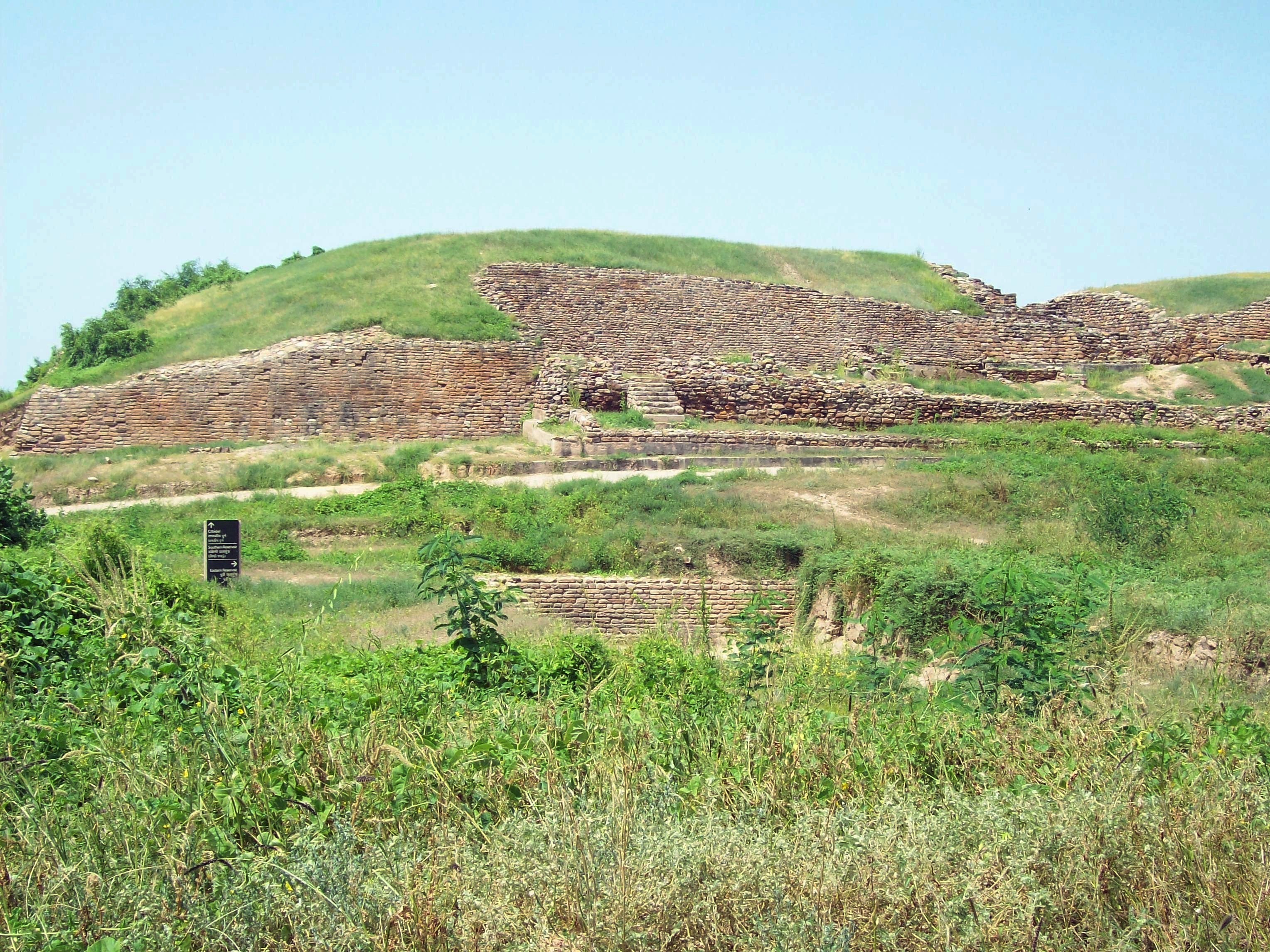
The question of when true horses (Equus caballus) first arrived in the Indian subcontinent has remained one of South Asian archaeology's most contentious topics. For decades, the debate centered on skeletal remains excavated from Bronze Age settlements, most notably the Indus Valley site of Surkotada in Gujarat.
Surkotada, excavated by the Archaeological Survey of India (ASI) in the 1970s, yielded a sequence of occupation levels dating to the third millennium BCE. Archaeologist A.K. Sharma initially identified equid bone fragments across these strata as belonging to Equus caballus. In the early 1990s, Hungarian archaeozoologist Sándor Bökönyi examined the Surkotada specimens and published a report asserting that the teeth, incisors, and phalanges (toe bones) displayed enamel patterns characteristic of true domesticated horses (Tony Joseph / Early Indians excerpt).
That identification was quickly contested. Zooarchaeologist Richard Meadow argued that morphological variations in isolated equid teeth and phalanges are notoriously unreliable for distinguishing Equus caballus from wild ass species native to Kutch, such as the Indian wild ass (Equus hemionus khur) or donkeys (Equus asinus) (Richard Meadow / ResearchGate). Bone fragmentation and surface weathering make visual differentiation between these species exceptionally difficult without intact cranial or limb diagnostic features.
To resolve these morphological ambiguities, researchers have increasingly turned to paleogenomics. Ancient DNA (aDNA) extracted from skeletal remains allows scientists to sequence mitochondrial and nuclear genomes, providing precise species identification regardless of bone fragment preservation.
Morphological Overlap and the Zooarchaeological Limit
Determining species identity from fragmentary bone assemblages has long presented an analytical limit for zooarchaeology in South Asia. Wild equids of the species Equus hemionus have inhabited the arid regions of northwestern India and Pakistan throughout the Holocene (the geological epoch spanning the last 11,700 years).
In contrast, wild populations of Equus caballus are not documented in post-Pleistocene South Asian fossil records (Tony Joseph / Early Indians excerpt). Consequently, verifying the presence of Equus caballus at a Bronze Age site requires unambiguous diagnostic traits that distinguish true horses from local wild hemiones.
Bökönyi’s diagnostic criteria relied heavily on the curvature of enamel folds on cheek teeth and the width of toe bones (Wikipedia). However, subsequent comparative studies of modern and ancient equid skeletons demonstrate that enamel patterns within Equus hemionus overlap considerably with Equus caballus (Richard Meadow / ResearchGate). When bones are weathered or broken—as is typical in trash pits and hearth deposits at ancient habitation sites—visual classification alone produces conflicting interpretations.
Paleogenomic Timelines and Eurasian Lineages
Ancient DNA sequencing bypasses morphological ambiguity by directly reading the genetic barcode of the specimen. Genomic analysis of equid remains across Eurasia has established distinct evolutionary lineages for Equus caballus, Equus hemionus, and Equus asinus.
Genomic studies led by Vagheesh Narasimhan and David Reich (Narasimhan et al., Science 2019) mapped ancient human and animal gene flow across Central and South Asia. The genetic datasets demonstrate that domestic horse pastoralism expanded rapidly from the Eurasian Steppe during the Middle-to-Late Bronze Age (after 2000 BCE).
In human populations, Steppe-related genetic ancestry appears in South Asia primarily in samples dated after 1800 BCE (Narasimhan et al., Science 2019). Paleogenomic profiling of animal remains in Eurasia tracks a parallel timeline for the dispersal of the modern domestic horse lineage, which originated in the Pontic-Caspian steppe before spreading southward and eastward during the second millennium BCE.
Evidence shows that pre-2000 BCE assemblages in the Indus region predominantly yield wild equid profiles (Equus hemionus) when tested genetically, while true Equus caballus genetic signatures become established in the subcontinental record in later centuries.
⚖ Scholarly debate
A central scholarly debate persists regarding how physical zooarchaeology and paleogenomics should be integrated when interpreting Indus Valley site assemblages.
One position, maintained by traditional zooarchaeological proponents, holds that carefully documented physical skeletal remains from sites like Surkotada, Hallur, and Kalibangan must be evaluated on their own stratigraphical merits. Scholars taking this view argue that localized early occurrences of Equus caballus cannot be ruled out purely on regional genetic models, and that trade connections could have introduced domesticated horses to urban centers earlier than wide-scale gene flow events indicate.
Conversely, archaeogeneticists and evolutionary biologists argue that without high-coverage ancient DNA sequence confirmation or direct radiocarbon dating of the specific bone fragments in question, morphological identifications remain unverified hypotheses. They point out that intrusive stratigraphy—where younger bone fragments sink into older archaeological layers through post-depositional disturbance—frequently misleads physical identification in multi-occupational mounds.
As paleogenomic techniques continue to improve, direct molecular testing of disputed equid remains provides a definitive pathway to resolve the Surkotada debate, establishing clear genomic timelines for South Asia's environmental and cultural history.
Foundational Scholarly Sources
- Reich, D. et al. (2009). Reconstructing Indian Population History. Nature. https://www.ncbi.nlm.nih.gov/pmc/articles/PMC2842210/
- Moorjani, P. et al. (2013). Genetic Evidence for Recent Population Mixture in India. American Journal of Human Genetics. https://www.ncbi.nlm.nih.gov/pmc/articles/PMC3769933/
- Narasimhan, V. M. et al. (2019). The Formation of Human Populations in South and Central Asia. Science. https://www.science.org/doi/10.1126/science.aat7487
- Shinde, V. et al. (2019). An Ancient Harappan Genome Lacks Ancestry from Steppe Pastoralists or Iranian Farmers. Cell. https://www.cell.com/cell/fulltext/S0092-8674(19)30967-5