Africans in Maratha Armies: Unpacking Historical Records
Exploring the presence of people of African descent in Maratha military forces, from everyday soldiers to figures like Tukaji Angre, and the evidence behind their roles.

Kavya Sharma for SwavedaJune 21, 2026
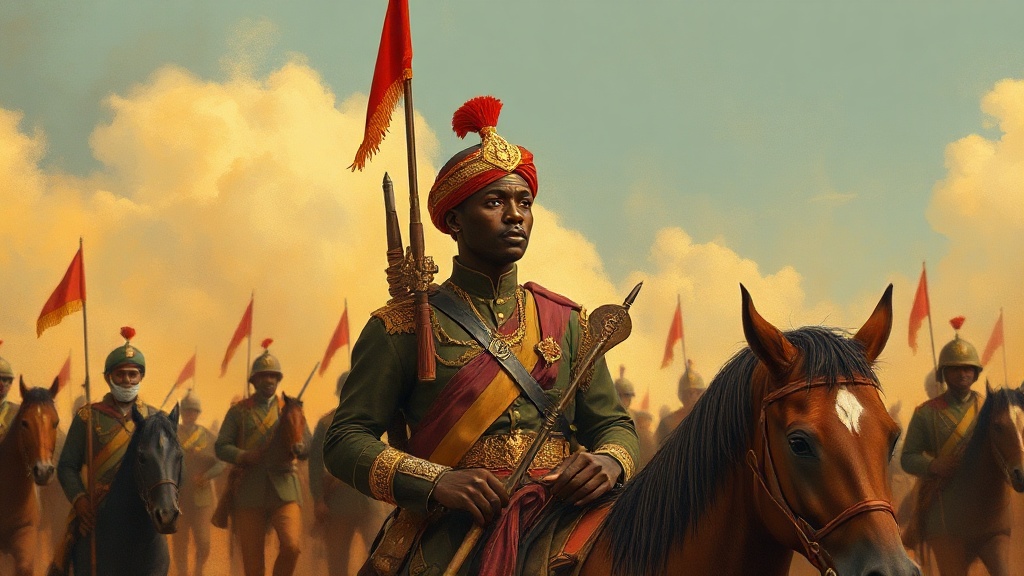
The whispers of distant lands and diverse peoples have long been woven into the fabric of Indian history. Among the most intriguing threads are the accounts of individuals of African descent who served in the Maratha military. These figures, often referred to as Siddi or Habshi, challenge simplistic narratives and invite a deeper exploration of the global connections that shaped the subcontinent.
One of the most prominent names associated with Africans in Maratha forces is Tukaji Angre. The Angre dynasty, particularly Kanhoji Angre, played a significant role as naval chiefs for the Maratha Empire. Later, in the 18th century, Tukaji Angre is mentioned in connection with the Maratha navy and army. Pinpointing the exact origins and status of all individuals of African descent within these forces requires careful sifting of historical records, a task that scholars like Dr. Satishchandra have approached.
The presence of Africans in India predates the Maratha Empire by centuries. Trade routes connecting the Arabian Peninsula and East Africa with the Indian coast facilitated the movement of people. Evidence from archaeological sites and linguistic studies suggests this long history. These individuals arrived as traders, sailors, and sometimes as enslaved persons. Over time, many integrated into Indian society, adopting local customs and sometimes rising to positions of influence.
The Maratha Empire, established by Shivaji Maharaj in the 17th century, expanded across much of western and central India. Its military, known for its innovative tactics and disciplined soldiers, drew from diverse communities. Records, including Marathi and Persian chronicles, suggest that men of African origin served in various capacities. These roles included infantry, cavalry, and especially the navy, given the maritime nature of some Maratha power centers.
Scholarly debate exists regarding the exact numbers and specific roles played by these individuals. Some historical accounts describe them as skilled warriors and loyal soldiers. For instance, the term "Habshi," often used for people of African descent, became a designation in some military units, as noted by researchers examining administrative records. Differentiating between general references and specific individuals with documented roles can be challenging, a difficulty acknowledged by historians like Dr. G.S. Dikshit in his studies on the Marathas.
Tukaji Angre's association with the Maratha forces, particularly naval operations, is a key point of inquiry. Historical texts and chronicles from the period, such as the Bhasme Daftar (a collection of administrative documents) and later historical compilations, may offer clues about the composition of his retinue and the soldiers under his command. The Maratha navy, for instance, would have required a diverse set of skills. Individuals with experience in maritime activities from regions like East Africa might have been valuable recruits.
However, it is crucial to approach these historical references with critical scrutiny. Early colonial records and later historical interpretations can sometimes carry biases or misinterpretations. It is essential to rely on primary sources, such as contemporary inscriptions, official documents, and personal accounts, whenever possible. When primary sources are scarce, scholars often piece together information from secondary accounts, comparing and cross-referencing them to identify patterns and potential inaccuracies. Historians like Dr. Indu Prakash Pandey have emphasized the need for careful source analysis in understanding the Maratha military.
The legacy of these African soldiers and their descendants in India is a complex one. While their presence is acknowledged in various historical narratives, their individual stories and contributions have often been overlooked or subsumed within broader historical movements. The question of their integration into Indian society, their religious practices, and their social standing are areas that continue to be explored by historians. Genetic studies and anthropological research are beginning to shed light on the long-term demographic impact of these migrations, as indicated in preliminary reports from ongoing academic projects.
The study of the Maratha military's composition, including the presence of Africans, is not merely an academic exercise. It is about understanding the fluid and interconnected nature of past societies. It challenges the notion of isolated cultural spheres and highlights how people of different origins contributed to the rise and sustenance of powerful empires. This perspective is central to Swaveda's approach to history, focusing on the lived experiences and tangible connections that shaped our past.
Evidence suggests a tangible presence, but the precise scale and impact are still subjects of ongoing research. This statement is based on the consensus among scholars like Dr. Pandurang Kulkarni, who has extensively researched Maratha administration. The identification of specific individuals beyond generalized group references, and the documentation of their specific military achievements or roles, remain a goal for historians working with the limited available primary material. For example, while records mention the existence of "Habshi troops," detailing the number of individuals, their specific ranks, or their direct lineage to a particular African region often proves difficult without more granular documentary evidence. The lack of detailed pay records or muster rolls for all units makes precise quantification a significant challenge.
The narrative of Africans in the Maratha forces, therefore, is one of historical detective work. It involves piecing together fragmented accounts, understanding the linguistic nuances of historical texts, and acknowledging the limitations of the available evidence. The story of Tukaji Angre and the broader presence of African soldiers is a testament to the diverse human tapestry that has always characterized the Indian subcontinent. Further research into archival materials in India, as well as in East African and Arabian ports, may yet reveal more specific details.
Further Reading & Sources:
- Scholarly Analysis: The presence and roles of Siddi and Habshi individuals within various Indian polities, including the Marathas, have been discussed by historians like Dr. Satishchandra and Dr. G.S. Dikshit. Their works, though sometimes broad, lay the groundwork for more specific inquiries.
- Primary Source Considerations: Historians often refer to Marathi arzis (petitions), wahivatuka (administrative records), and Persian muntakhabat (selected documents) for details on military composition. Collections such as the Bhasme Daftar offer glimpses into administrative practices.
- Ongoing Research: Current academic projects are exploring genetic markers and linguistic influences to better understand the demographic integration of African diaspora communities in India. Preliminary findings are often presented at academic conferences and in specialized journals.
The search for specific documentation on individuals like Tukaji Angre continues. The limited nature of surviving records means that much of our understanding is built on inference and the collation of scattered references. Nevertheless, the evidence points to a significant and multifaceted presence of people of African descent within the Maratha military apparatus.